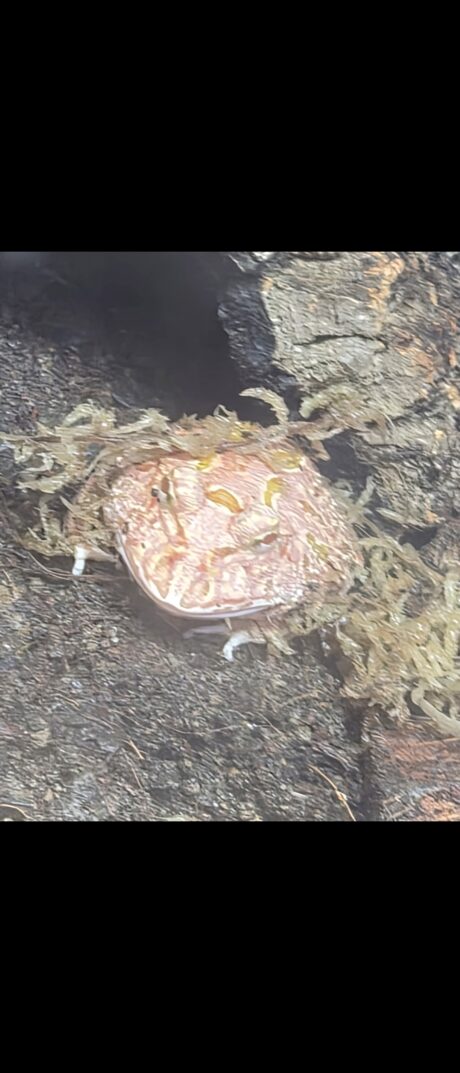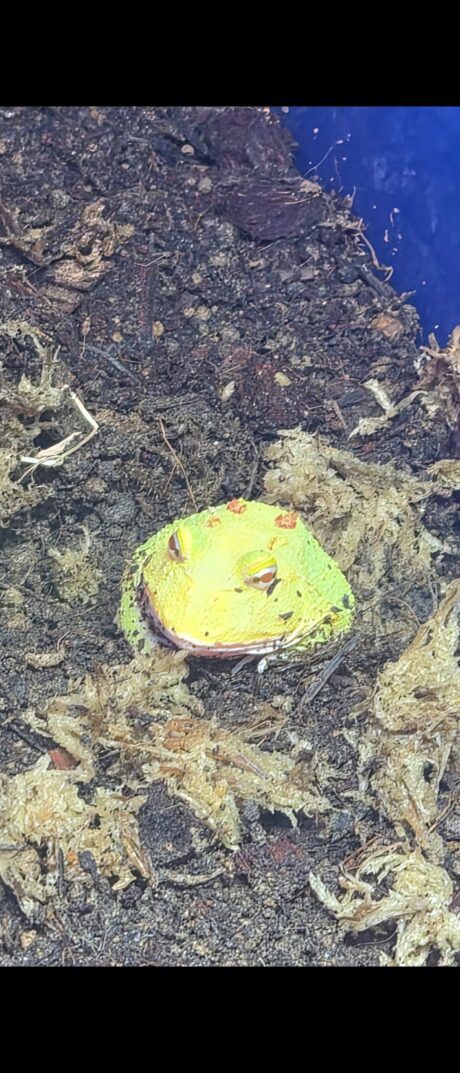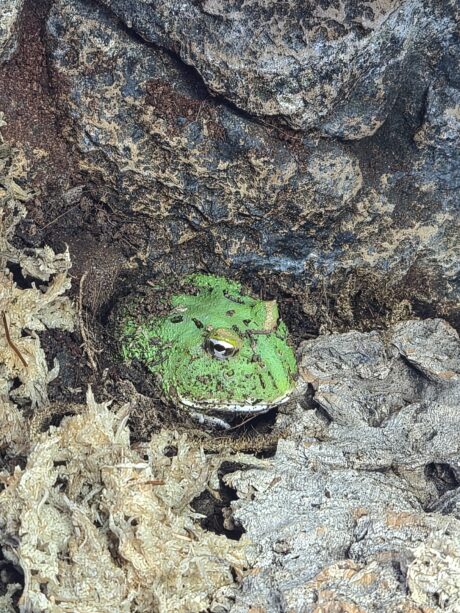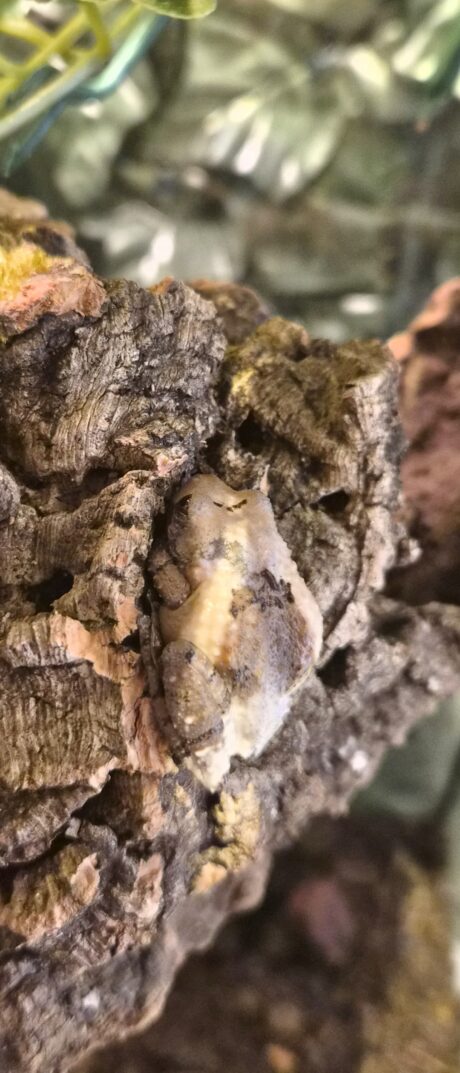
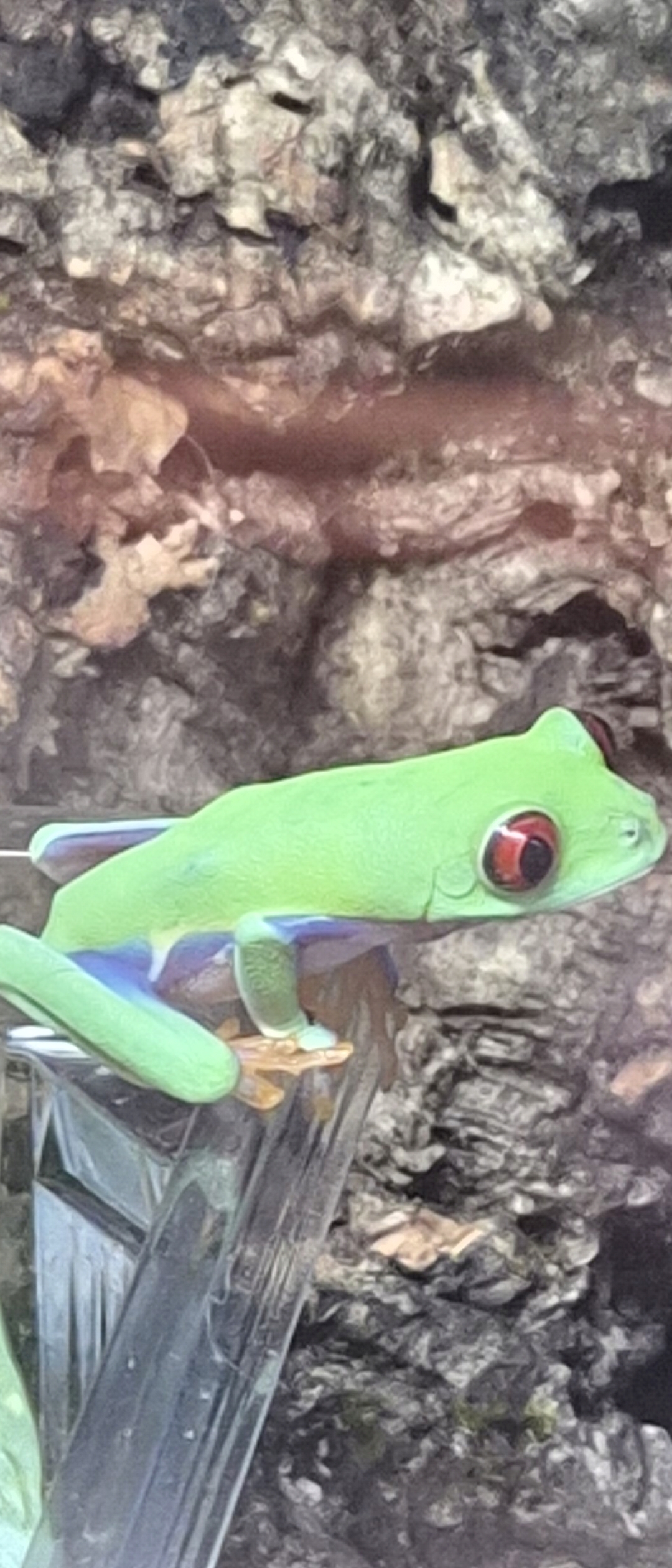
The red-eyed tree frog (Agalychnis callidryas) is native to the tropical rainforests and humid lowland forests of Central America and parts of north western South America.
Housing & Enclosure
- Minimum Size: A tall vertical glass terrarium measuring at least 45 x 45 x 60 cm (or equivalent to a 10–20+ gallon arboreal setup) accommodates 2 to 3 adult frogs.
- Substrate: Use moisture-retaining, natural tropical substrates like coconut coir, Arcadia EarthMix, or damp moss.
- Decorations: Provide plenty of sturdy live or artificial broad-leaf plants (such as snake plants or pothos), vertical branches, cork bark, and vines for climbing and resting.
Temperature & Heating
- Daytime Temperature: Maintain an ambient background temperature of 22°C to 26°C (72°F–79°F), with a warmer basking area in the top quarter reaching up to 27°C–30°C.
- Nighttime Temperature: Allow temperatures to drop slightly to around 21°C–23°C (or low 70s), supported by a low-wattage heat mat or ceramic/halogen bulb on a thermostat.
- UK Homes Note: UK room temperatures often require supplementary heating during autumn and winter months using thermostatically controlled heat sources.
Humidity & Water
- Humidity Levels: Keep daytime humidity around 50%–70%, rising higher (up to 80%–90%) overnight or via daily misting.
- Water: Provide a clean, shallow water bowl with dechlorinated/conditioned water (amphibians absorb water through their skin, so tap water must be treated).
Lighting & UVB
- UVB Requirements: Use a low-level tropical UVB tube (such as a 5–6% or T5/T8 Shade Dweller/UVB 100) on a 12-hour day/night cycle to support calcium and Vitamin D3.
Diet & Supplementation
- Food: Feed live insects like brown crickets, small locusts, and worms appropriate for the frog’s size (no wider than the space between their eyes). Juveniles need feeding daily or every other day, while adults are fed every 2 to 3 days.
- Supplements: Dust insects regularly with a quality calcium and multivitamin powder.
Handling & Behavior
- Minimal Handling: Red-eyed tree frogs are nocturnal, jumpy, and primarily “display animals.” Minimise handling to reduce stress; if you must move them, use powder-free nitrile/latex gloves or let them hop onto a soft surface.