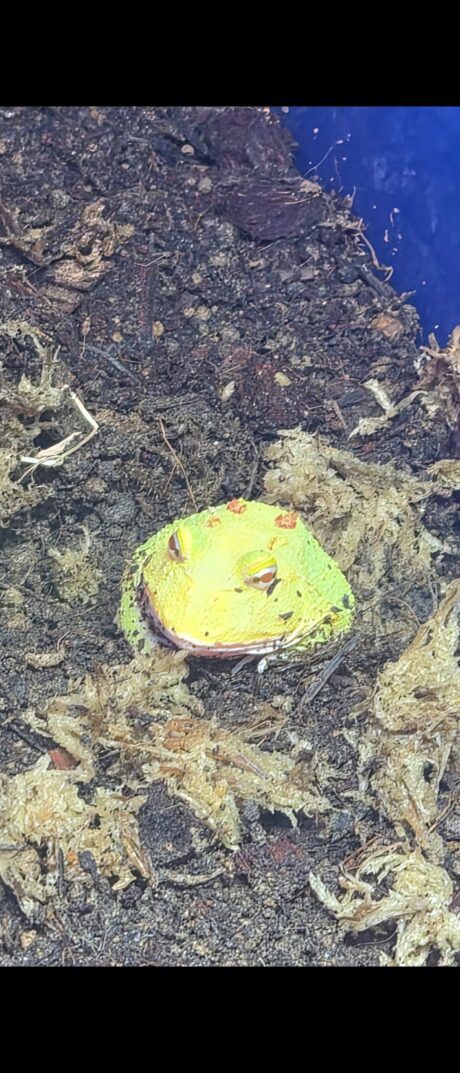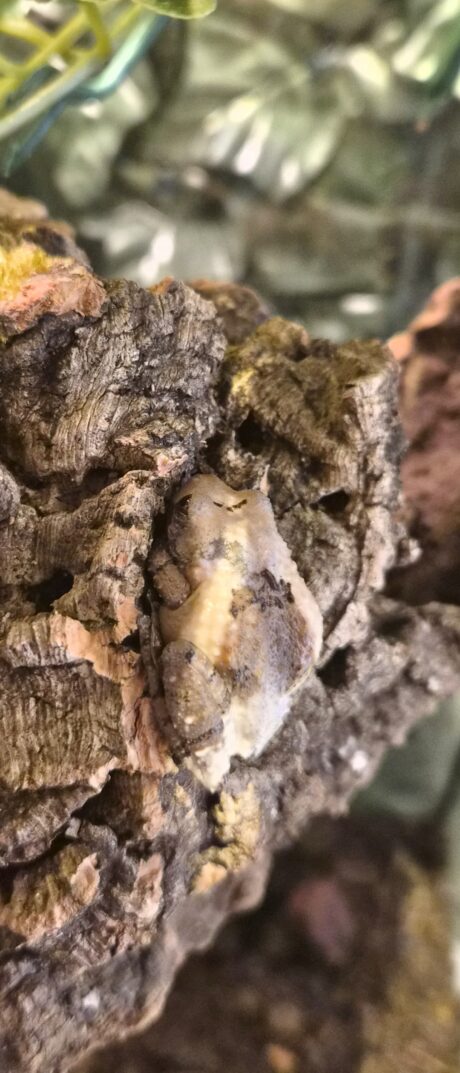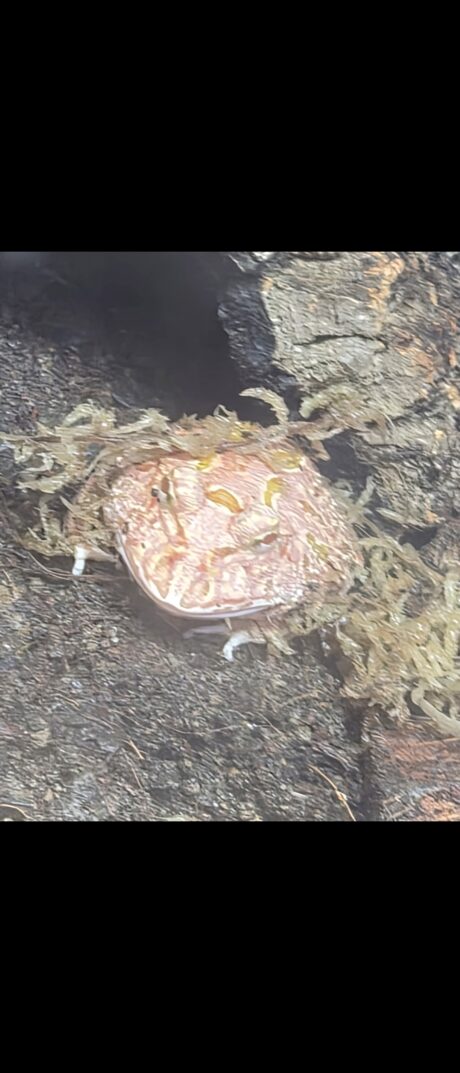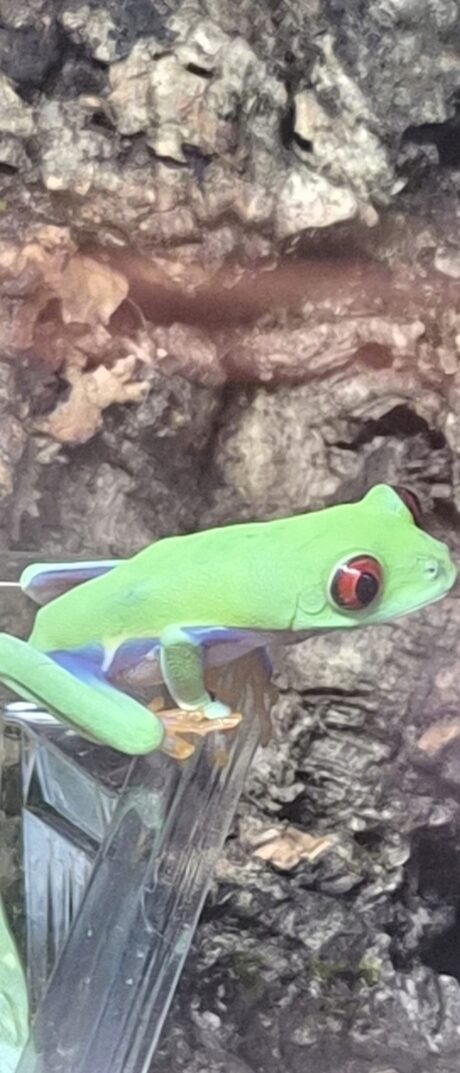
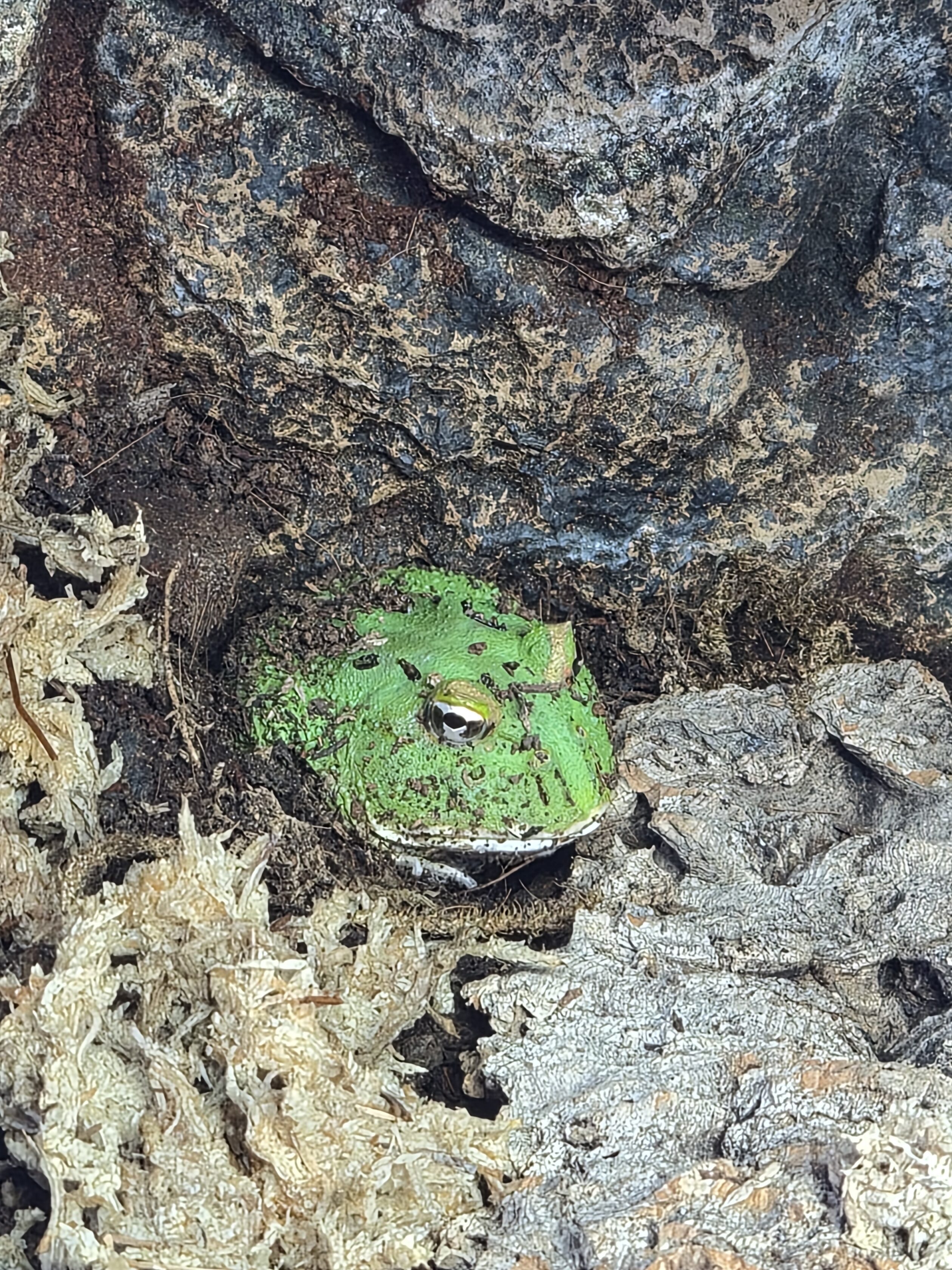
Packman Frogs (genus Ceratophrys) are native to the tropical and subtropical regions of South America.
Housing & Substrate
- Enclosure Size: A minimum glass terrarium of 60 x 45 cm (or 600 x 300 mm) is recommended for an adult, while juveniles can start in smaller setups (such as a 45 x 45 cm or 10-gallon equivalent).
- Substrate: Use deep, moisture-retaining and burrowing-friendly substrate like compressed coconut coir (coco fibre), orchid bark mix, or bioactive soil (avoid sharp bark that can injure their skin). Add a layer of leaf litter or cork bark for cover.
- Water Dish: Provide a shallow, clean dish of dechlorinated water daily, as they absorb water and breathe through their skin.
Temperature & Heating
- Daytime Temperature: Maintain a warm gradient of 22°C to 28°C with a basking spot around 28°C (or roughly 75–80°F ambient).
- Night time Temperature: Allow a safe night drop down to 15°C–20°C (or around 60–65°F).
- Heating Equipment: Use a side heat mat regulated by a thermostat or a low-wattage basking/ceramic bulb depending on your room temperature.
Lighting & UVB
UVB Output: Provide a low-to-mid level UVB (2% to 6% T5 or compact tube) on a 12-hour day/night cycle to support overall health and calcium metabolism. Replace compact bulbs and T5 tubes every 6 months.
Humidity
- Target Humidity: Keep humidity between 60% and 80% (up to 90%).
- Misting: Mist the enclosure daily with dechlorinated water to keep the substrate damp and prevent dehydration or bad sheds.
Diet & Supplementation
- Feeders: Primarily feed gut-loaded insects such as locust, brown/black crickets, dubia roaches, and earthworms.
- Treats: Pinkie mice or small rodents can be offered very sparingly (e.g., once a month or every few weeks) as an occasional treat, as too much rodent protein causes fatty liver disease.
- Feeding Frequency: Feed juveniles every 2–3 days and adults every 7–10 days (use feeding tongs to avoid accidental bites).
- Supplements: Dust feeder insects with calcium plus D3 and reptile multivitamins/vitamin A on a regular schedule (e.g., calcium 2–3 times a week, multivitamins weekly).
Handling & Temperament
- Minimal Handling: Pacman frogs are ambush predators with a wide gape and a very strong bite that can break skin; they are best kept as display pets rather than handled animals.
- Safe Handling (when necessary): If you must move them, use powder-free latex/nitrile gloves or moist hands, and approach gently from behind.