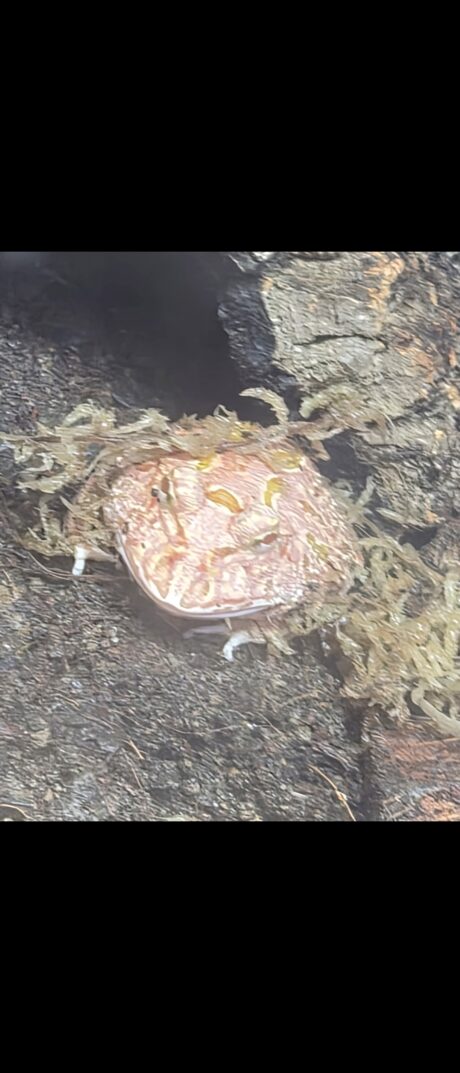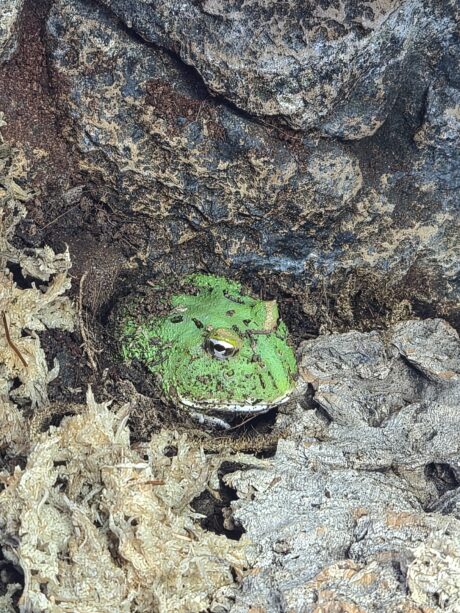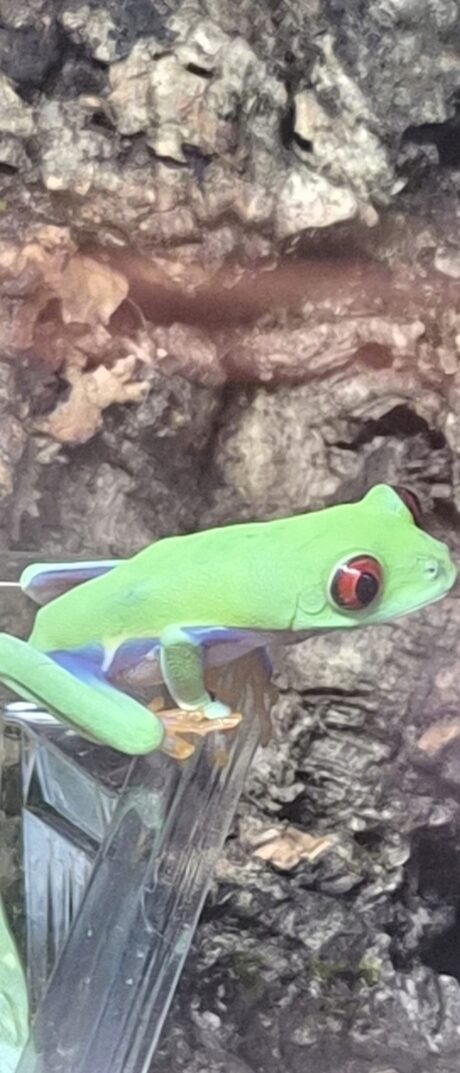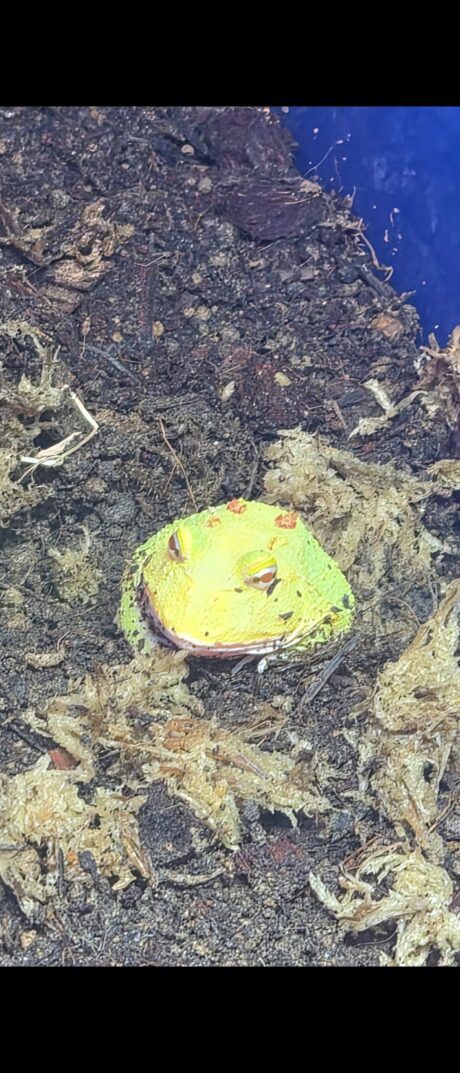
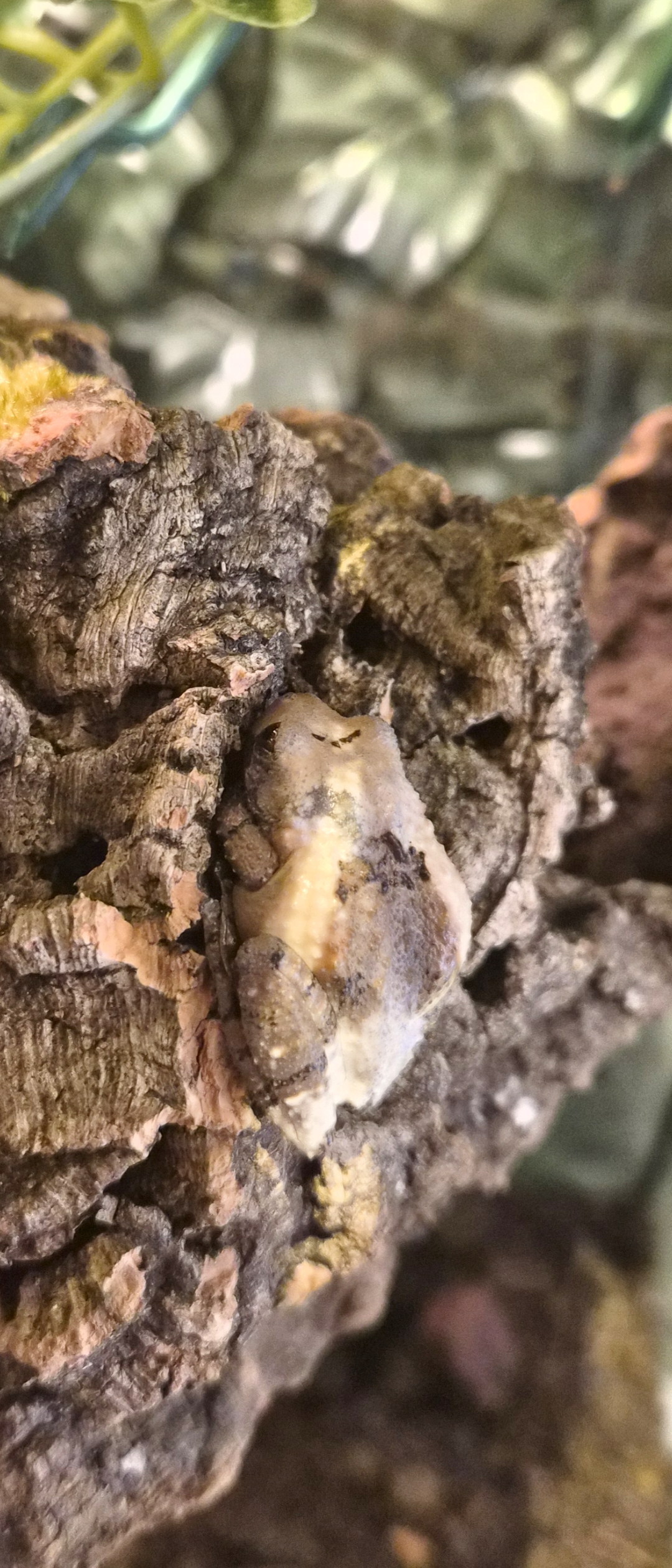
The bird poop frog (Theloderma asperum, also known as the pied warty frog or hill garden bug-eyed frog) is native to Southeast Asia and parts of South Asia.
Enclosure & Housing
- Tank Size: A vertical terrarium measuring around 45x45x60 cm (or an 18″ x 18″ x 24″ / 10-to-20 gallon high tank) is ideal for 1 to 2 adult frogs.
- Water Area: They are semi-aquatic and need a dedicated water section or deep, sturdy water bowl (5 to 8 cm deep) that takes up a good portion of the floor, mimicking tree holes and riverbanks. Add Indian almond leaves to the water to release beneficial tannins.
- Substrate & Decor: Use an absorbent, moisture-retaining substrate such as coconut fiber, peat moss, or sphagnum moss, paired with climbing branches, cork bark, and live hardy plants (like Java moss or pothos). A bioactive setup with springtails and dwarf white isopods helps keep the enclosure clean.
Temperature & Humidity
- Temperature: Keep ambient temperatures cool to moderate, roughly 21°C to 24°C (68°F to 75°F) during the day, with a slight drop at night. Avoid temperatures exceeding 27°C (80°F), as high heat can be fatal. Skip intense heat bulbs; room temperature or a gentle LED light is usually sufficient.
- Humidity: Maintain high humidity between 60% and 100% via daily misting or a fogger system.
Diet & Nutrition
- Food: Feed live, gut-loaded insects appropriate to the frog’s small size, such as small crickets, fruit flies, small mealworms, and roaches.
- Frequency: Feed juveniles daily and adults every other day to 2–3 times a week.
- Supplements: Dust feeder insects with a calcium and multivitamin powder regularly (at least 2x a week for vitamins).
General Tips
- Water Maintenance: Change about half the water weekly and remove waste, though do not scrub the water completely clean as they thrive in organic-rich tannic water.
- Handling: Limit handling as much as possible; if you must move them, use wet, powder-free gloves to protect their sensitive skin.