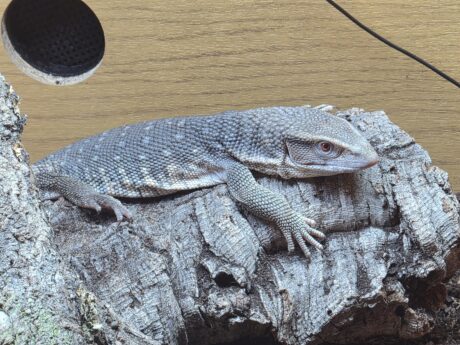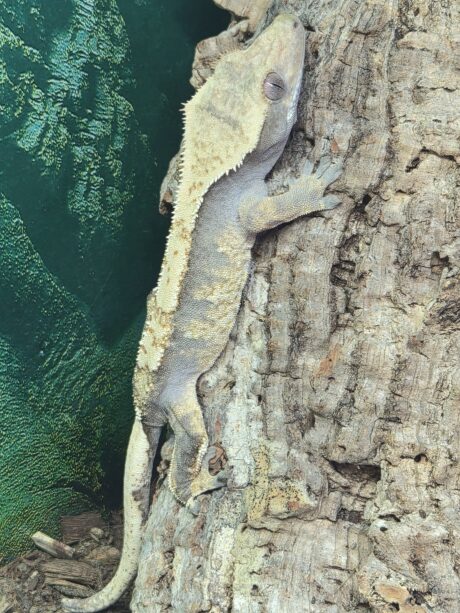
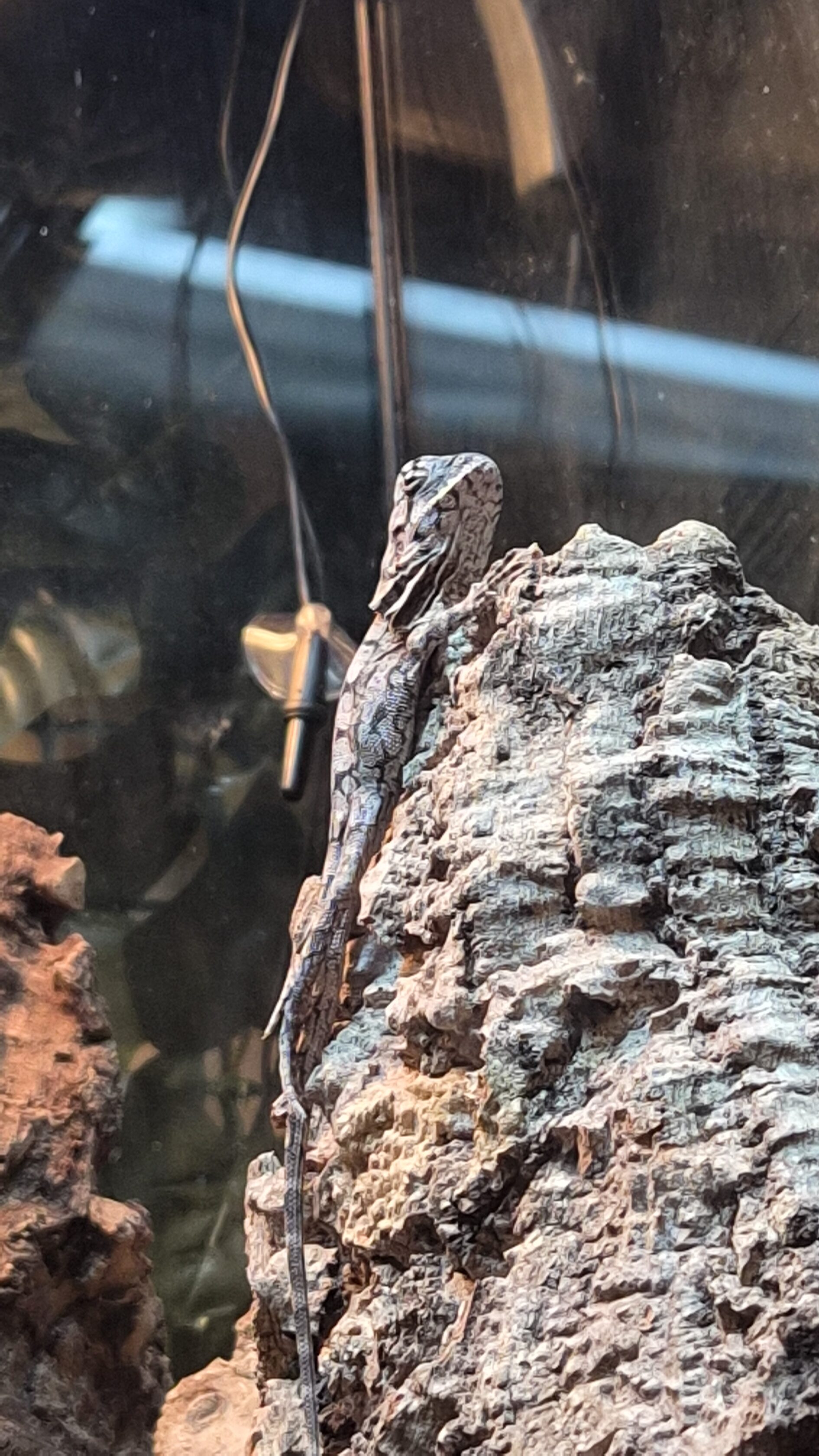
Frilled Lizard originates from Northern Australia and Southern New Guinea
Housing & Enclosure
- Minimum Size: Adults grow up to roughly 90 cm (3 feet) and are strictly arboreal. They require a large, tall vertical wooden vivarium—ideally around 4 x 2 x 4 feet to 5–6 feet in height (e.g., 48x24x48 inches or larger) to accommodate climbing.
- Layout & Decor: Fill the space with sturdy vertical climbing branches, cork bark, and dense artificial or live foliage to provide security and reduce stress.
- Substrate: Use moisture-retaining substrates like a topsoil/play sand mix, coco husks, or cypress mulch to help hold humidity.
- Social Setup: House singly (one per enclosure), as they are territorial and prone to fighting, especially males.
Heating & Lighting
- Basking Temperature: Maintain a hot basking spot of 36°C to 40°C (approx. 100°F–115°F) covering roughly a third of the enclosure.
- Cool End & Night: The cool side should sit around 26°C to 30°C, dropping down safely at night (minimum around 16°C–20°C, with ceramic heat emitters used if ambient room temperatures fall too low).
- UVB Lighting: Provide a high-output 10% to 12% T5 UVB tube (spanning across the ceiling of the enclosure) for 10 to 12 hours daily to support vitamin D3 and calcium metabolism. Replace UVB tubes every 6 months as output degrades
Humidity & Hydration
- Humidity: Target 60% to 70% humidity maintained via regular misting or a good substrate/ventilation balance.
- Water: Provide a large, clean water bowl on the cool side for drinking and occasional soaking.
Diet & Supplements
- Diet: Primarily insectivorous/omnivorous, feeding on live insects such as brown crickets, locusts, dubia roaches, and mealworms/superworms.
- Supplements: Dust all live insect meals regularly (2–3 times a week) with quality calcium and multi-vitamin powders (including D3).