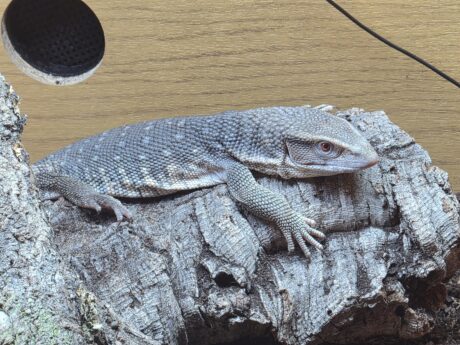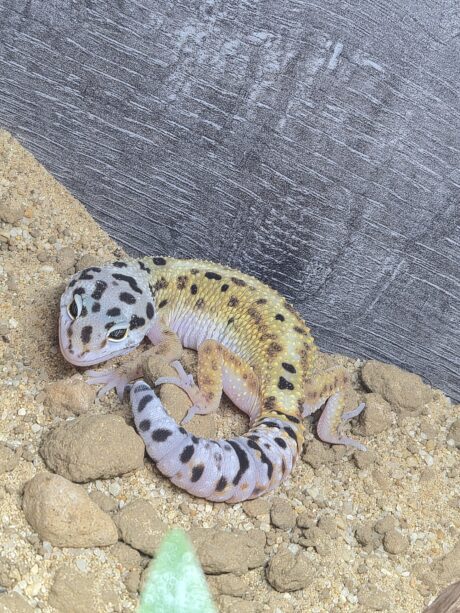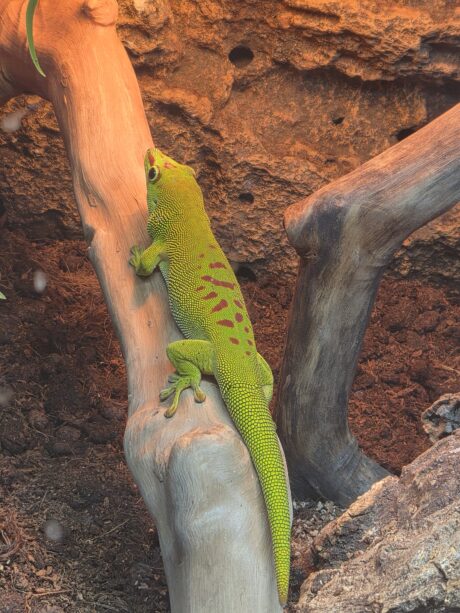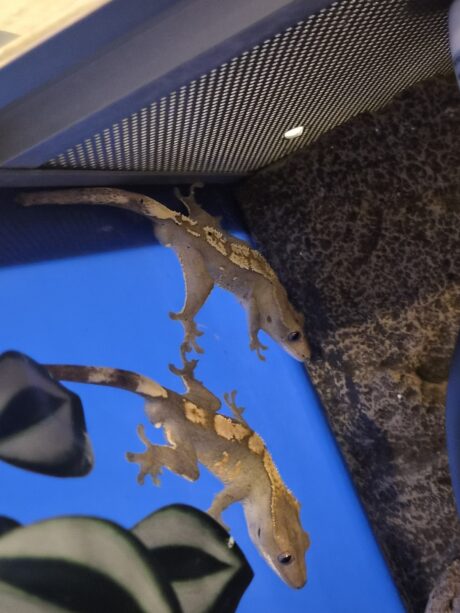
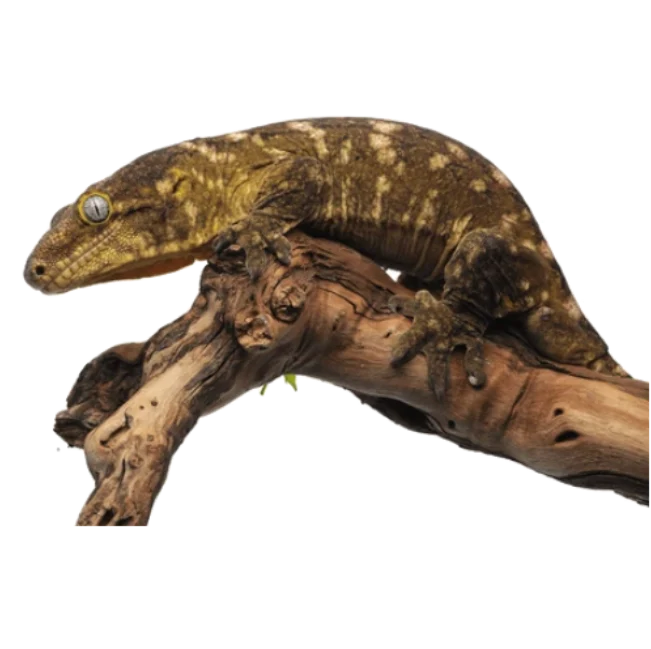
The Leachie gecko (Rhacodactylus leachianus, also known as Leach’s giant gecko or the New Caledonian giant gecko) is native to New Caledonia, an archipelago in the Pacific Ocean located east of Australia.
Housing & Enclosure
- Enclosure Size: Adults need a large, tall vertical terrarium—typically a minimum of 90 x 45 x 90 cm (or roughly 48″ x 24″ x 48″ for larger localities).
- Decor & Substrate: Use moisture-retaining substrates (such as a soil-bark mix or bioactive setup), thick sturdy branches to support their heavy build, cork bark tubes for hiding, and live or artificial foliage.
- Ventilation: Good airflow is essential alongside humidity to prevent stagnant conditions.
Temperature & Humidity
- Temperature: Maintain an ambient daytime range of 22°C to 26°C (with a warm basking spot around 27°C–28°C), dropping slightly at night. Avoid overheating above 28°C–29°C.
- Humidity: Keep relative humidity around 60%–70% during the day, rising to 80%–90% after evening misting, allowing the enclosure to dry out partially between sprays.
- Lighting: Low-intensity full-spectrum UVB (6%–7% shade-dweller strip or compact bulb) is beneficial for establishing a natural day/night cycle and vitamin synthesis.
Diet & Feeding
- Diet Base: Formulated commercial Crested Gecko Diet (CGD) powders like Pangea, Repashy, or Gecko Nutrition.
- Insects & Prey: Offer gut-loaded live insects (such as locusts, crickets, or roaches) dusted with calcium and D3 about 2 times per week; adults may occasionally accept whole prey like pinkie mice.
- Hydration: Provide daily misting for dew-drop licking and/or a clean water source.
Behavior & Handling
- Temperament: They are nocturnal, territorial, and known for vocalizing (growling or barking) and having bold or defensive personalities.
- Handling: Best appreciated as display animals; minimize frequent handling as they can deliver a strong bite if stressed.
- Lifespan: They are a long-term commitment, often living 20 to 30+ years