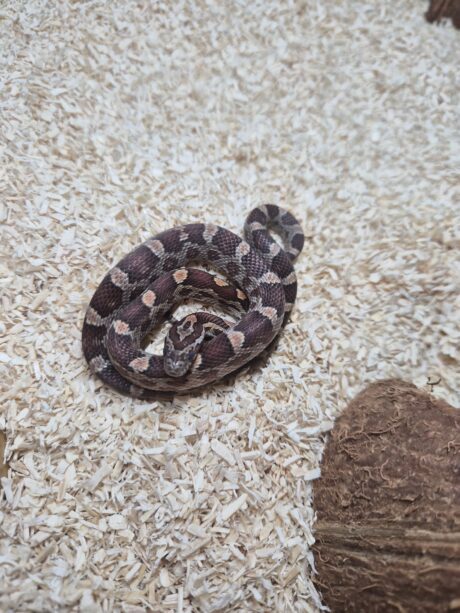
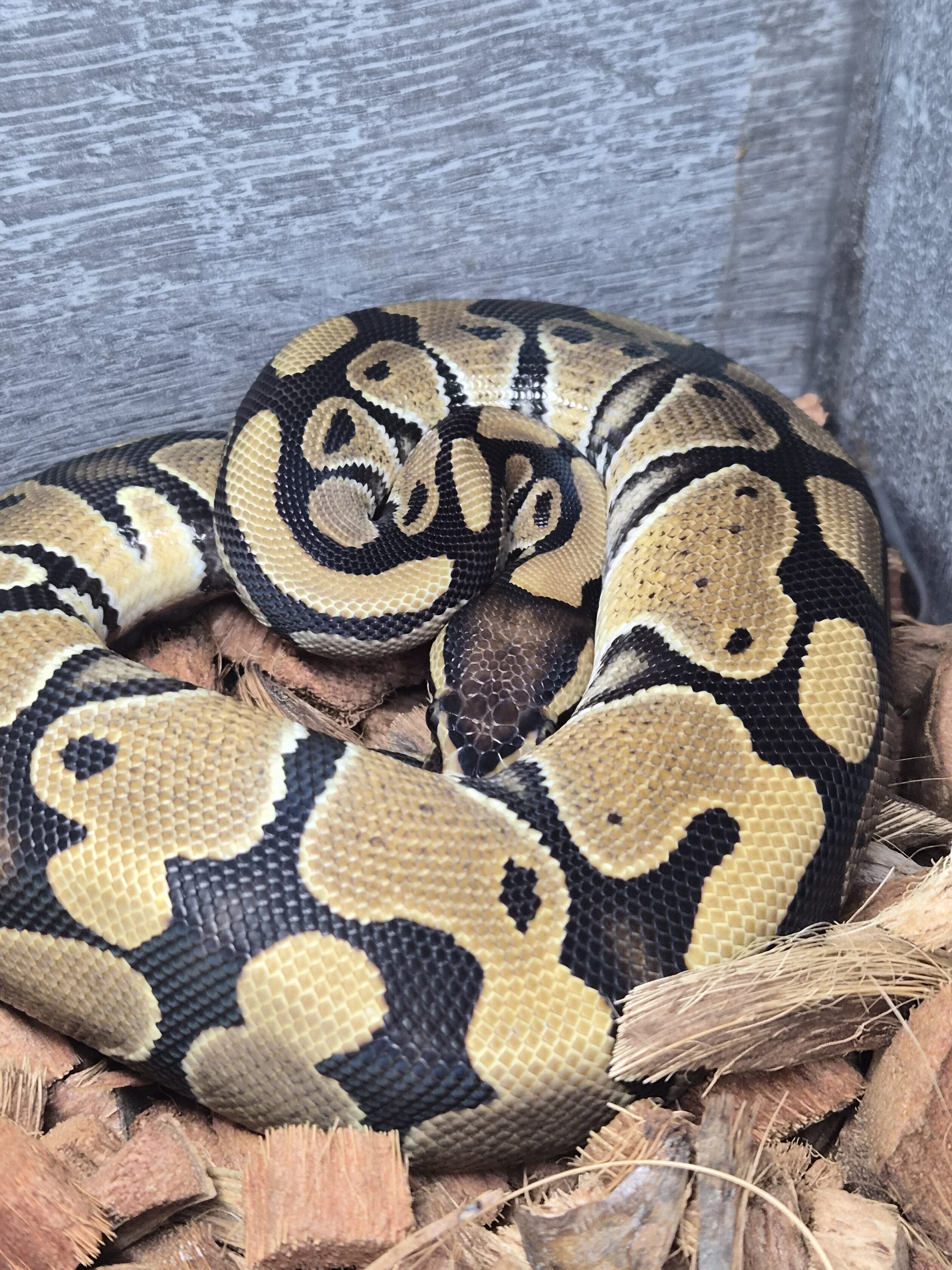
Royal Pythons (also known as ball pythons) are native to West and Central Africa.
Housing and Enclosure
- Enclosure Type: Use a wooden vivarium or PVC enclosure with good ventilation and secure sliding doors. A minimum size of 3 x 2 x 2 ft is recommended for younger or smaller snakes, while larger adults (especially females) need at least 4 x 2 x 2 ft.
- Substrate: Use non-reactive, arid-to-moderate substrates like reptile-safe bark chips, beech chips, or organic topsoil/eco-earth mixes that help hold humidity without moulding.
- Decor & Hides: Provide at least two secure, dark hide boxes (one on the warm side and one on the cool side) along with branches for low-level climbing.
Temperature and Heating
- Temperature Gradient: Maintain a warm basking hot spot of around 32°C to 33°C at one end and a cooler ambient zone of around 24°C at the other.
- Heating Equipment: Use guarded heat lamps or ceramic heat emitters connected to a reliable thermostat to prevent thermal burns.
Humidity and Lighting
- Humidity: Keep relative humidity between 50% and 60% (raising it slightly during shedding cycles), monitored with a digital hygrometer.
- Lighting: While they are crepuscular (most active at dawn and dusk), a low-percentage UV-B lighting setup on a 12-hour timer is beneficial.
Diet and Feeding
- Prey: They are strict carnivores. Feed frozen-thawed mice or rats scaled to the widest part of the snake’s body.
- UK Rule: Live feeding is illegal in the UK and dangerous for the snake.
- Frequency: Juveniles typically eat every 5–7 days, while adults transition to every 7–14 days (or less frequently in winter). Always provide a large clean water bowl for drinking and soaking.
Lifespan and Handling
- Lifespan: Royal pythons commonly live for 20 to 30 years in captivity.
- Handling: They are docile by nature, though hatchlings can be shy or defensive. Support their full body gently during short handling sessions (10–15 minutes) and avoid handling for 48 hours after a meal.