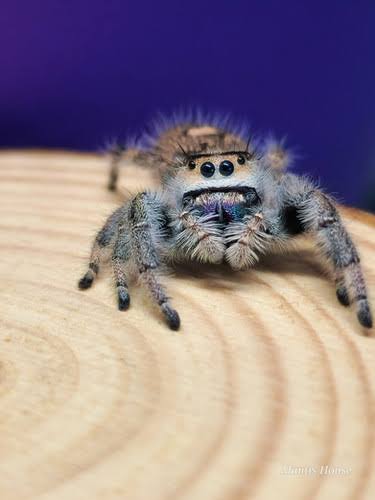
The “Cola” jumping spider refers to a colour or locality morph of the regal jumping spider (Phidippus regius), which originates from the Apalachicola region in the south eastern United States (primarily northern Florida, Georgia, and Alabama).
Housing & Enclosure
- Type: Vertically-oriented acrylic or clear plastic enclosure or starter cup with top and cross-ventilation to prevent stagnant air and mold.
- Size: Small starter cubes or deli cups for spiderlings (instars i3–i5), graduating to a small-to-medium arboreal cube as they grow.
- Decor & Substrate: A thin layer of coconut coir, moss, or spider bedding at the base, paired with vertical climbing perches like cork bark, twigs, and artificial or live plants. They build a silk “hammock” nest near the top.
Temperature & Heating
- Target Temp: Maintain an ambient range of 22°C to 26°C.
- UK Setup: Because UK room temperatures can drop too low in autumn and winter, use a low-wattage reptile heat mat placed safely on the side or back of the enclosure (never underneath) controlled by a thermostat. Avoid direct sunlight or hot window sills.
- Lighting: A gentle 12-hour LED light cycle during the day helps them hunt, as they are diurnal hunters with keen eyesight.
Humidity & Hydration
- Humidity: Keep relative humidity around 40%–60% (slightly higher during a molt).
- Misting: Lightly mist one side of the enclosure with a fine spray bottle once a day (or 2–3 times a week depending on ambient room humidity) so the spider can drink water droplets. Avoid open water bowls in small setups due to drowning risks.
Diet & Feeding
- Spiderlings (i3–i5): Flightless fruit flies (Drosophila melanogaster or Drosophila hydei) every 2–3 days.
- Juveniles & Adults: Small green bottle flies, blue bottle flies, or small locusts/roaches. Feed adults roughly every 5 to 7 days, adjusting based on the plumpness of their abdomen. Remove uneaten live prey promptly.