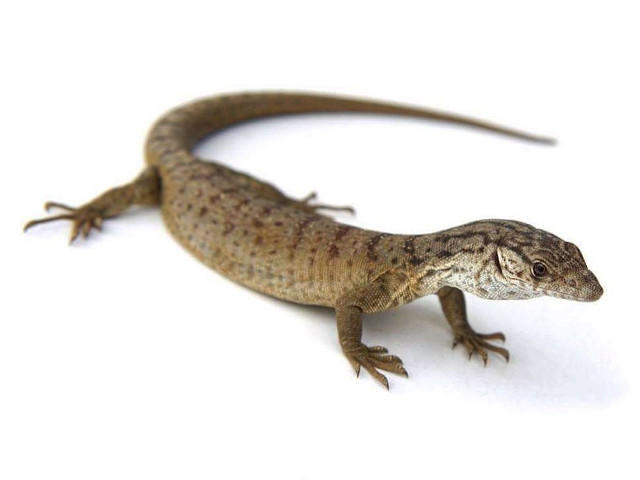
The pygmy mulga monitor (Varanus gilleni) is native and endemic to central and northwestern Australia, particularly arid outback regions such as Central Australia and the Northern Territory.
Enclosure & Climbing Space
- Size: Adults do best in at least a
3ft x 1.5ft x 3ft(approx.90cm x 45cm x 90cmhigh) enclosure or larger, making full use of vertical climbing space. Juveniles can start in smaller setups before upgrading.
- Furnishings: Provide sturdy branches, cork bark tubes, stacked flat rocks or slate (which hold heat), and tight crevices where they feel secure. Seal small gaps so hatchlings and juveniles cannot escape.
- Substrate: Use a digging-friendly arid mix (such as sand or sandy soil/topsoil blends) deep enough for burrowing, paired with a humid retreat containing damp sphagnum moss to aid shedding.
Heating, Lighting & Humidity
- Basking & Ambient Heat: Provide a high-heat basking spot (typically around
45°C+up to60°C+, controlled with a dimming/pulse thermostat to prevent overheating) and a warm daytime ambient gradient, allowing a natural drop at night.
- UVB Lighting: Use a high-output desert UVB tube (such as a
12%–14%T5 UVB) on a10–12hour photoperiod, positioned to match safe UVI distances.
- Humidity: Maintain strong airflow with generally dry-to-moderate ambient humidity (
~25%–45%), while offering a humid hide (~50%–65%) and occasional light misting or a shallow water dish.
Diet & Handling
- Diet: Feed mostly well-gutloaded, appropriately sized invertebrates—such as crickets, locusts, and roaches—dusted with calcium and multivitamin supplements. Keep portions measured so adults stay lean rather than overweight.


- Feeding & Handling: Use feeding tongs to avoid accidental nips from fast strikes. Move calmly, support the full body, avoid looming over them from above like a predator, and build trust gradually rather than forcing handling.