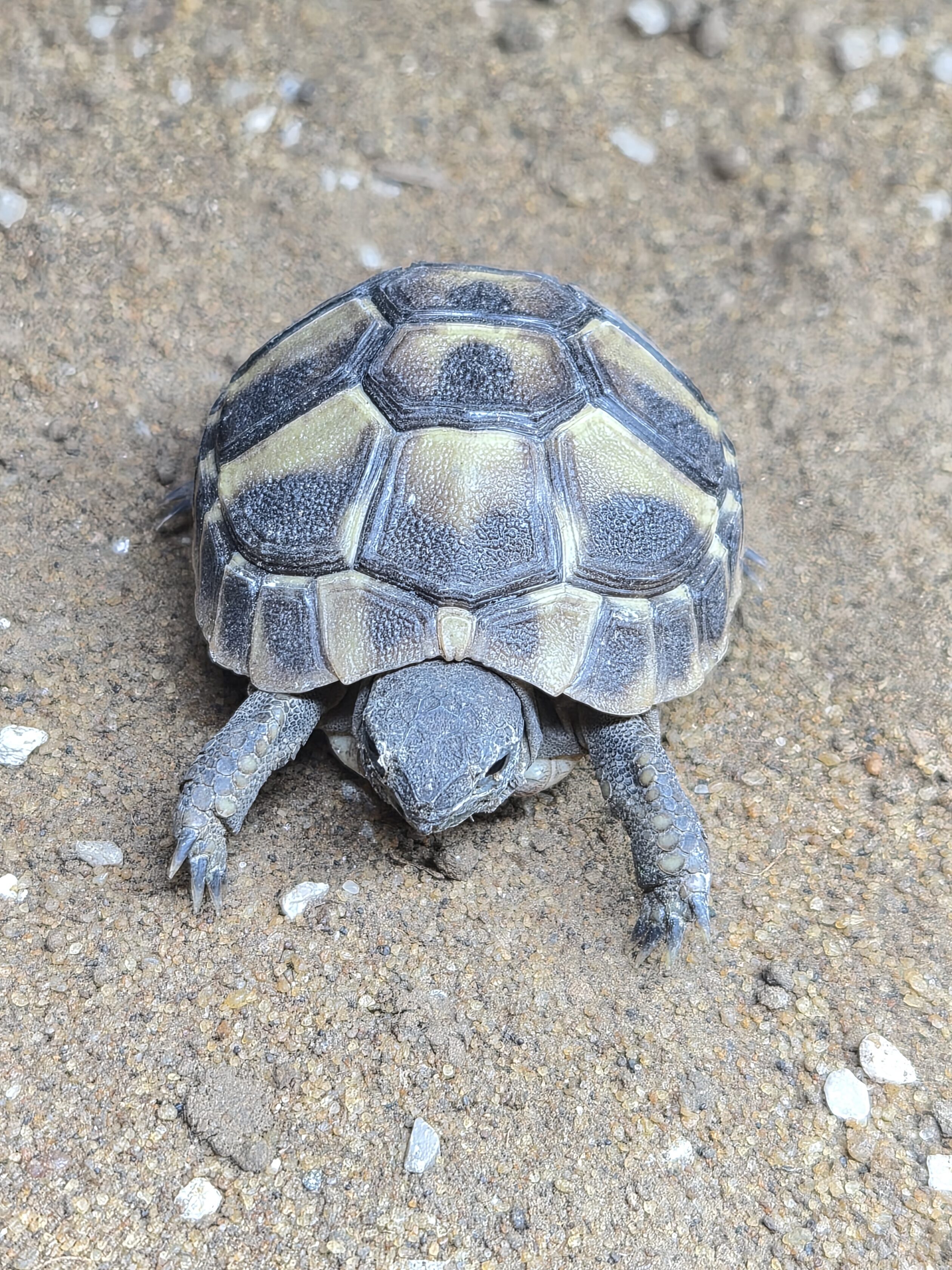
Hermann’s tortoises (Testudo hermanni) are native to southern Europe and the Mediterranean region. Their native range spans from eastern Spain to Greece and Turkey, typically broken into distinct regional groups.
Housing and UK Weather
- Indoor setup: Use a spacious open-topped tortoise table (at least 90 × 60 cm for juveniles and larger for adults) or a secure room/shed setup. Include hides at both warm and cool ends and a substrate such as a topsoil and play-sand mix.
- Outdoor setup: During warm UK months (typically late spring to late summer when temperatures are suitable), offer a secure, predator-proof outdoor enclosure with shade, hiding spots, and barriers sunk underground to prevent digging escapes. Protect tortoises from foxes, rats, dogs, and large birds.
- Cleaning: Spot-clean daily, provide fresh water daily, and do a full clean and substrate change every few weeks.
Heating and Lighting
- Basking and temperature gradient: Create a basking spot around 30–35°C using a heat lamp controlled by a thermostat, with a cooler end around 18–22°C. Allow temperatures to drop at night unless the room gets too cold.
- UVB lighting: Provide a 10–12% UVB source for roughly 10–14 hours a day (adjusted seasonally) so the tortoise can synthesise vitamin D3 and absorb calcium. Replace UVB bulbs on schedule as output fades.
Diet and Hydration
- Staple diet: Feed high-fibre, low-protein weeds and leafy greens such as dandelion leaves, clover, and plantain. Avoid high-sugar fruits, meat, and watery or high-oxalate foods like iceberg lettuce or spinach.
- Supplements: Lightly dust food with calcium powder and offer cuttlefish bone (which also helps keep the beak trimmed).
- Water and bathing: Keep a shallow water dish available for drinking and soaking. Give warm shallow baths regularly—especially for hatchlings and juveniles—to prevent dehydration.
Hibernation and Health
- Hibernation: Many Hermann’s tortoises hibernate in winter, depending on subspecies, age, and health. Only hibernate a healthy tortoise of suitable weight after consulting an experienced exotic/tortoise vet or specialist keeper.
- Health checks: Weigh your tortoise regularly and arrange a check-up with a reptile-experienced vet if you notice shell changes, discharge, lethargy, or lack of appetite.