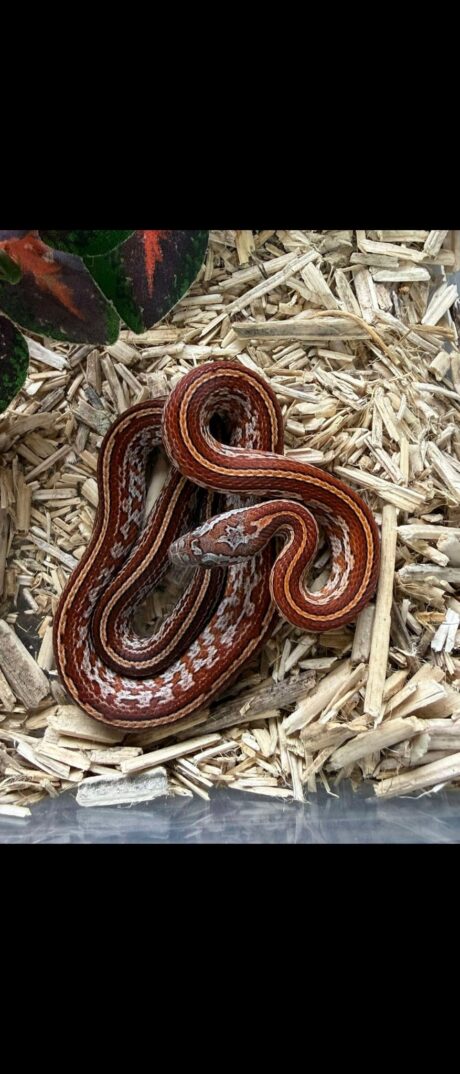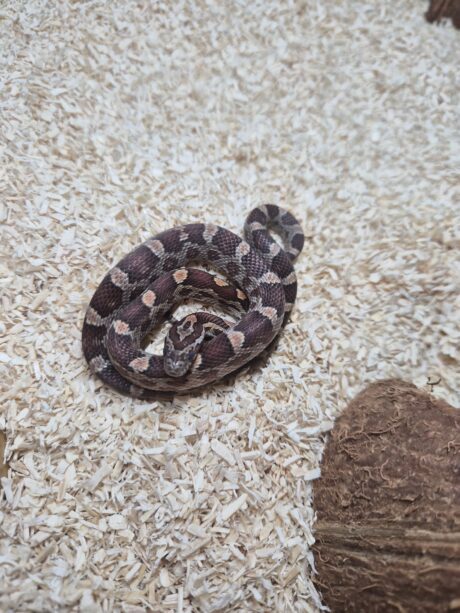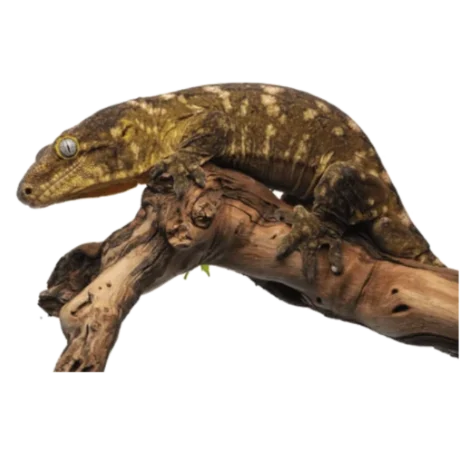
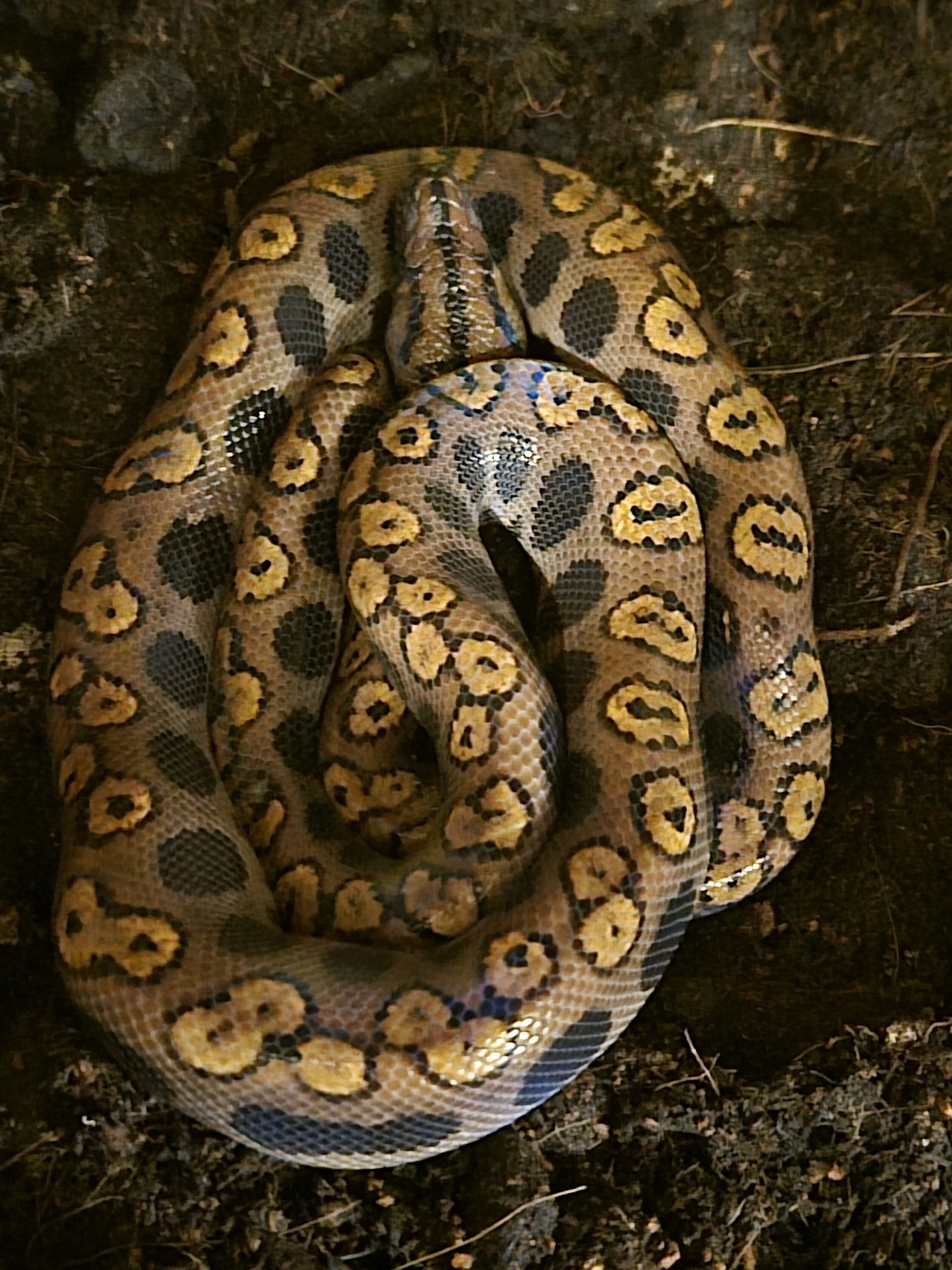
Brazilian rainbow boa (Epicrates cenchria cenchria) is native to tropical regions of South America, specifically throughout the Amazon River basin.
Enclosure & Housing
- Size: Adults need a minimum enclosure size of 4ft x 2ft x 2ft (approx. 1200mm in length) or larger to allow proper movement and thermal regulation.
- Material: Wooden vivariums or PVC/plastic enclosures hold humidity and temperature far better than all-glass terrariums.
- Substrate: Use moisture-retaining, tropical substrates like coconut coir, bark chips, or a jungle mix (at least 2–4 inches deep) to help maintain ambient moisture.
- Decor & Hides: Include sturdy branches for semi-arboreal climbing, artificial or live foliage, and a secure hide on both the warm and cool sides of the enclosure.
Temperature & Heating
- Warm Side/Basking: Aim for a warm spot of 28°C to 32°C (83°F–90°F).
- Cool Side: Maintain a cooler ambient range of 21°C to 25°C (70°F–77°F).
- Equipment: Use a ceramic heat emitter or a reptile radiator attached to a reliable pulse or dimming thermostat with a guard. Low-level T5 UVB lighting (such as a 2.0 to 3.0 UVI) is beneficial, though optional.
Humidity & Water
- Humidity Levels: Crucial for this species—keep humidity between 75% and 80%+ for adults, and even higher (up to 90–100%) for young snakes to prevent severe dehydration.
- Water: Provide a large, heavy water bowl big enough for the snake to soak in, and refresh it regularly. Misting the enclosure daily or using a moss hide can help maintain spikes in humidity.
Diet & Feeding
- Prey: Feed appropriate-sized frozen-thawed mice or rats (matching the widest part of the snake’s body).
- Frequency: Hatchlings and juveniles eat every 5 to 10 days, while adult boas should be fed every 10 to 14 days to avoid obesity.