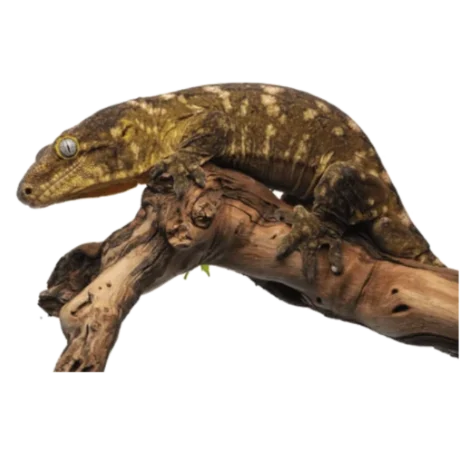
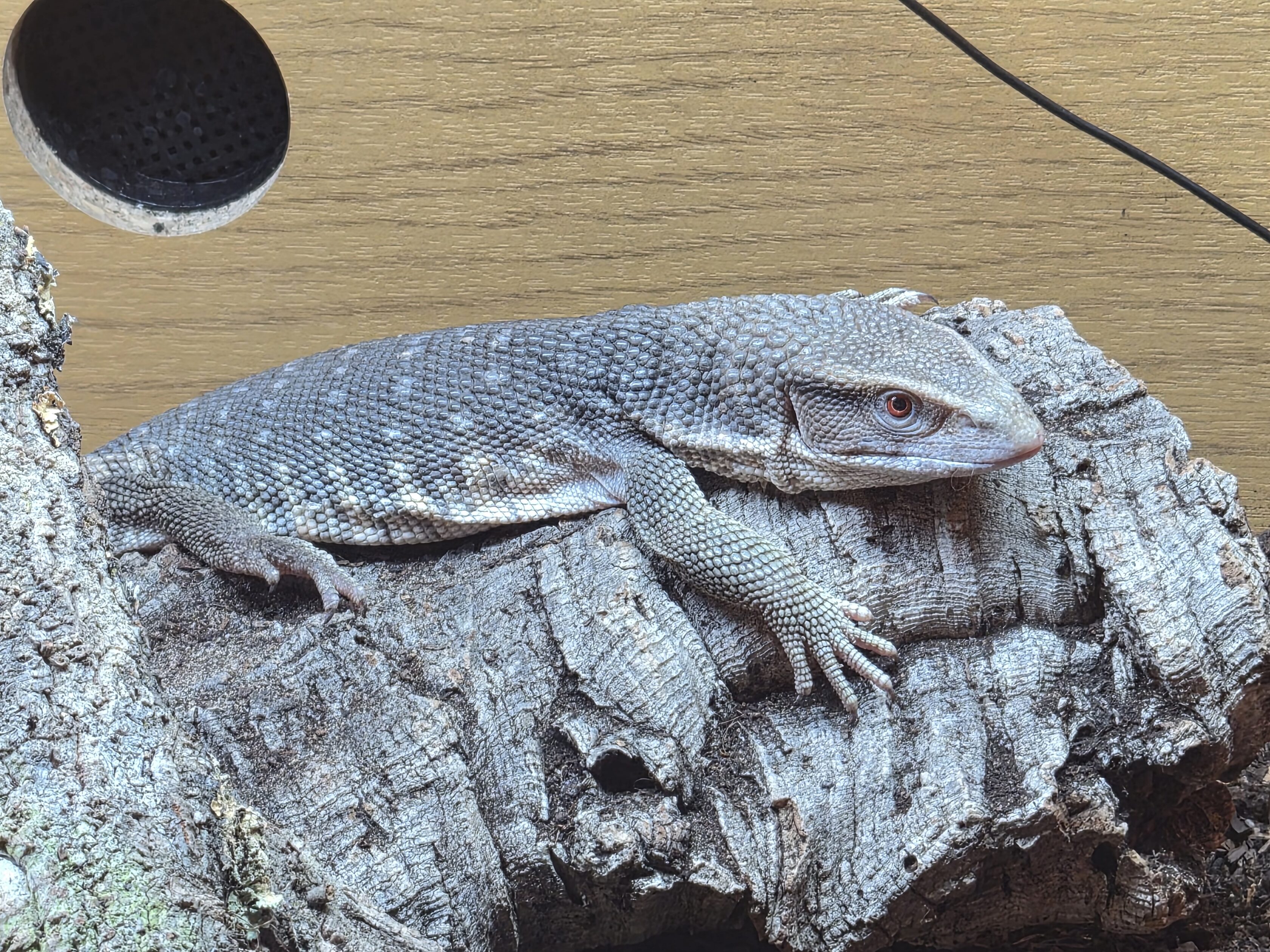
The savannah monitor (Varanus exanthematicus) is a medium-sized monitor lizard native to the savannah and grassland ecosystems of Africa, particularly in countries like Kenya, Tanzania, and Mali.
Housing & Substrate
- Enclosure size: Adults need a spacious custom vivarium—commonly at least 6–8 ft long with generous depth and height—rather than a standard glass tank. Underestimating adult space is a leading reason these lizards end up in rescue.
- Deep digging substrate: Provide a thick, compactable substrate mix (such as topsoil, coco fibre, and sand/soil blends) deep enough to hold burrows.
- Water & hides: Include sturdy hides and a large water dish for soaking and hydration, which supports healthy shedding. Access to water and moisture helps prevent retained skin around toes and tails.
Heating, Lighting & Humidity
- Basking & temperature gradient: Offer a hot basking surface (around 50–60°C / 122–140°F checked with an infrared temp gun) with a cooler retreat and a gentle overnight drop. Use a dimming/pulse thermostat to control heat sources safely.
- UVB lighting: Provide linear T5 high-output UVB lighting on a consistent 10–12 hour day/night cycle to support calcium metabolism and prevent metabolic bone disease.
- Humidity: Maintain moderate-to-elevated humidity (often around 50–75% depending on setup and microclimates) with proper ventilation so the enclosure stays moist without becoming stagnant or waterlogged.
Diet & Health
- Mostly insects: Feed a varied staple of gut-loaded invertebrates (such as dubia/other feeder roaches, locusts, crickets, and worms) dusted with calcium and vitamins as needed.
- Avoid overfeeding fatty prey: Heavy reliance on fatty rodents and overfeeding frequently cause obesity and fatty liver disease.