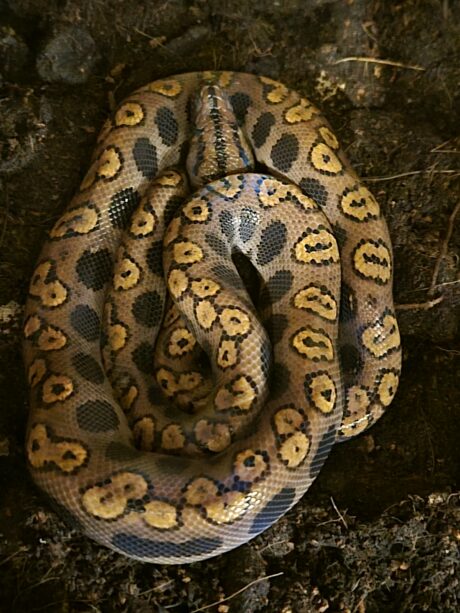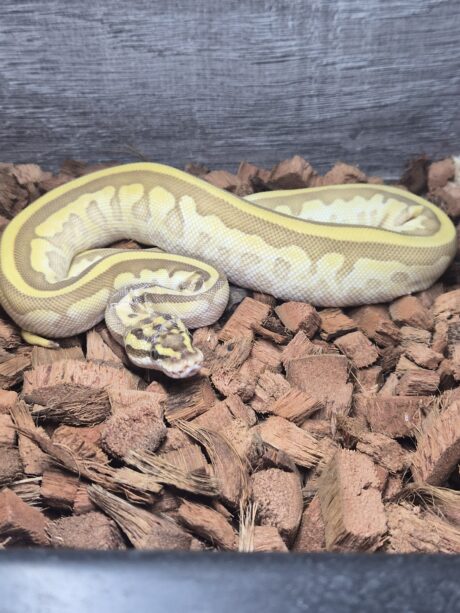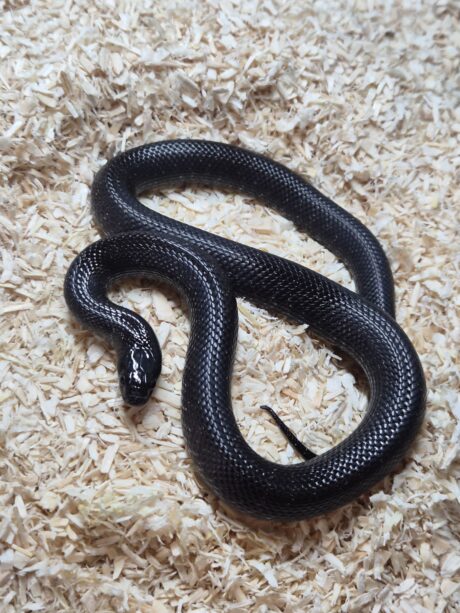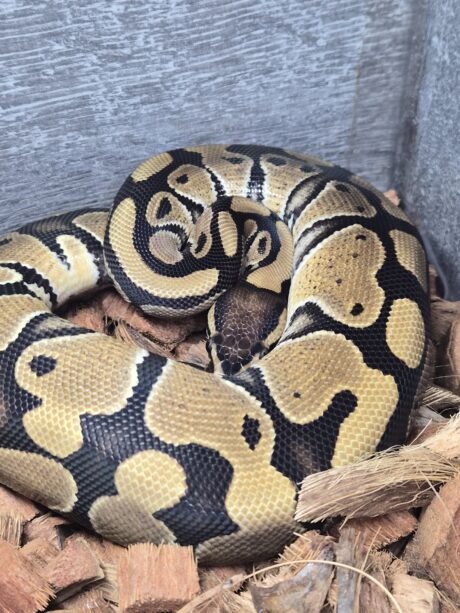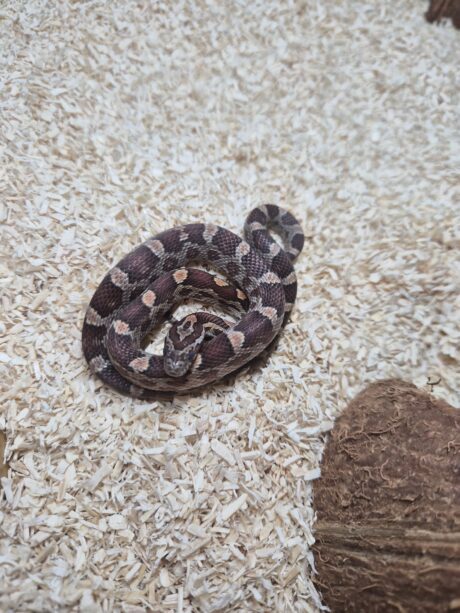
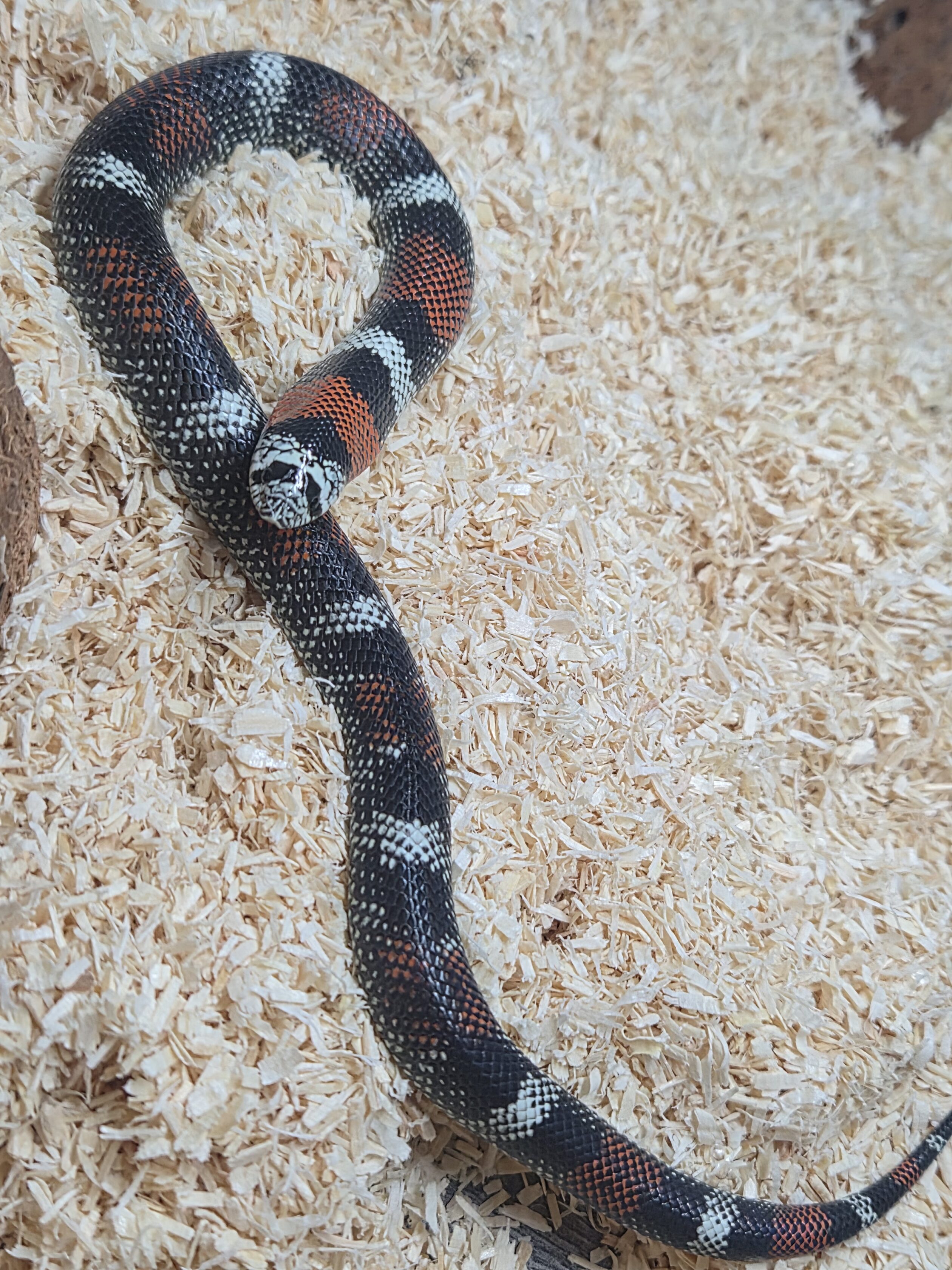
The tricolor hognose snake (Xenodon pulcher) is native to South America, specifically the Gran Chaco bioregion.
Housing & Enclosure
- Vivarium Size: A minimum of a 3ft wooden vivarium (or roughly a 20-to-30 gallon equivalent/30″ x 12″ x 12″ up to 3x2x2ft) with secure ventilation.
- Substrate: Use a deep layer (4+ inches) of a loose, fossorial substrate like coarse beech woodchip, aspen, or a soil/clay mix to allow natural burrowing.
- Decorations: Provide multiple hides on both the warm and cool sides, rocks for belly heat, and a wet/humid box with damp moss (especially useful during shedding). Do not cohabitate due to cannibalism risks.
Temperature & Heating
- Basking Side: Aim for a basking spot of roughly 88°F–95°F (31°C–35°C), with a general cool side dropping down to 70°F–75°F (21°C–24°C).
- Heat Source: Use an overhead halogen or basking bulb controlled by a thermostat on a 10–12 hour timer.
Lighting & Humidity
- Lighting: A low-to-medium UVB tube (2%–5% or 6% Arcadia/Zoo Med) is recommended.
- Humidity: Maintain ambient humidity around 30%–50%, ensuring a clean, submergible water bowl is available and refreshed daily.
Diet
- Prey: Carnivorous diet consisting of frozen-thawed mice (hatchlings/pinkies weekly for juveniles, every 1–2 weeks for adults).
- Note: They are rear-fanged venomous (similar effect to a bee sting), though generally docile.