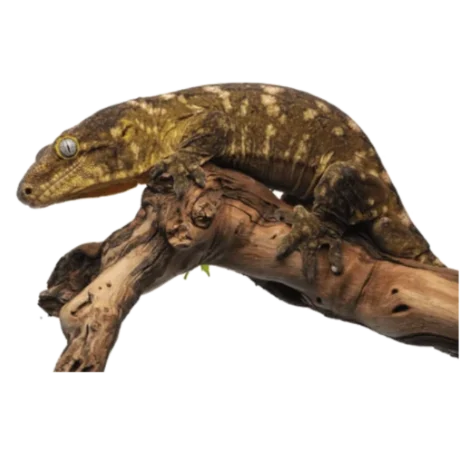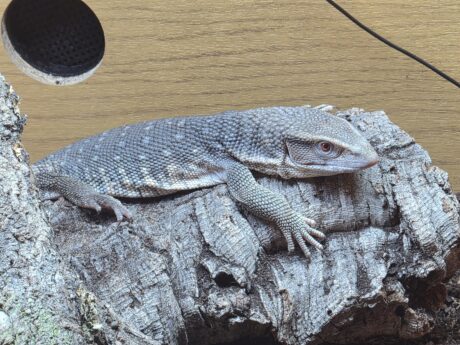
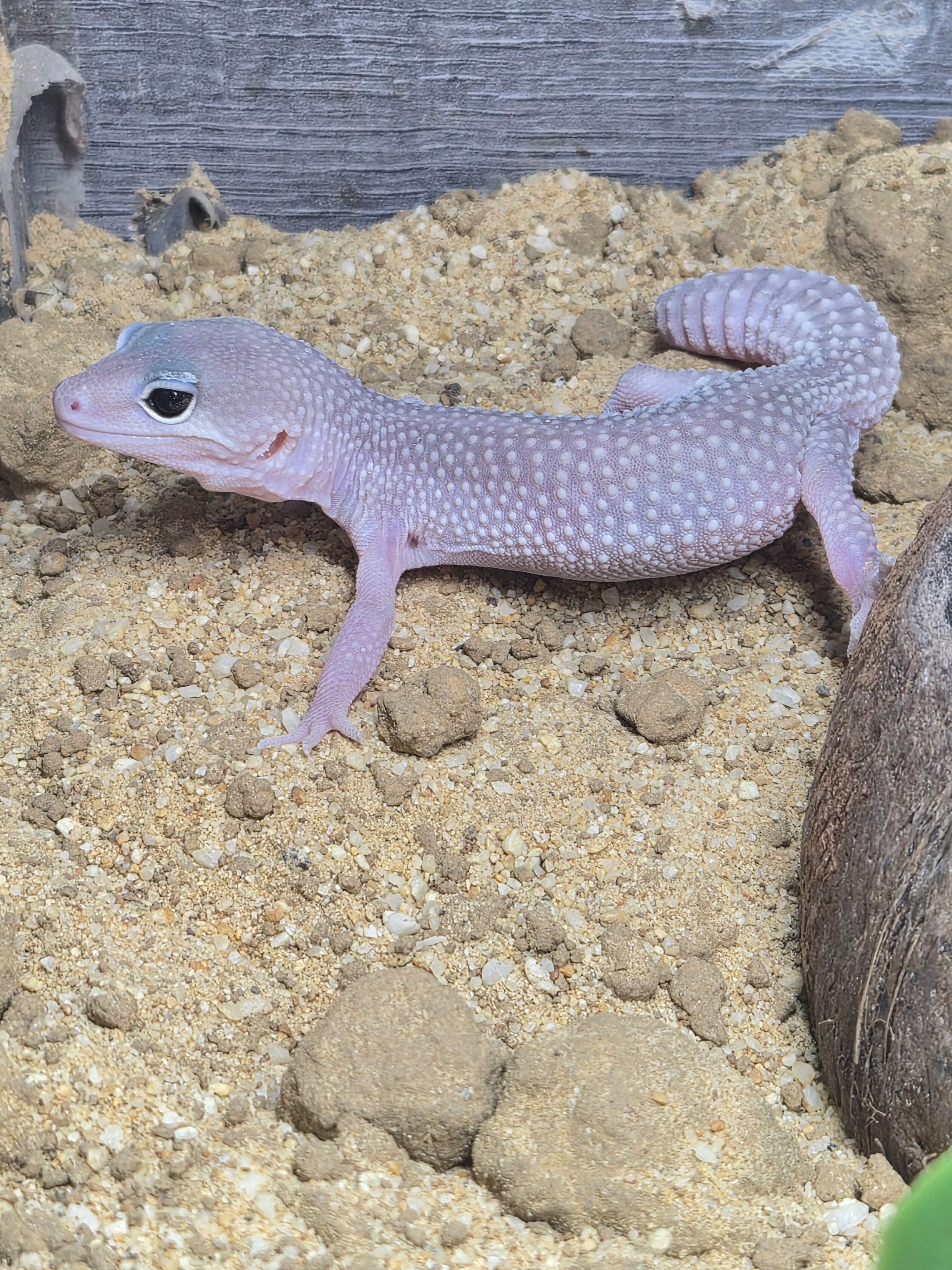
Leopard Geckos(Eublepharis macularius) are native to the arid and semi- arid rocky desserts, dry grass lands, and scrublands of South Asia .
Enclosure & Housing
- Tank Size: A minimum of 90 × 60 × 60 cm (approx. 36 × 18 × 18 inches) for an adult leopard gecko via Leopard gecko care sheet on Swell Reptiles.
- Substrate: Use a 50/50 mix of clean children’s play sand and organic topsoil for adults; avoid calcium sand or sharp builder’s sand.
- Hides & Decor: Provide a warm hide, a cool hide, and a humid hide box lined with damp sphagnum moss to assist with shedding.
- Solitary Living: House leopard geckos singly, as they are territorial and prone to fighting when kept together.
Temperature & Lighting
- Temperature Gradient: Maintain a warm basking side of 30–32°C and a cool side around 22–25°C controlled by a thermostat.
- Overhead Heating: Use a halogen bulb, deep heat projector, or ceramic heat emitter attached to a dimming or pulse thermostat.
- UVB Lighting: Provide a low-level 2% to 6% linear UVB tube (such as an Arcadia ShadeDweller) for a 12-hour day cycle.
- Humidity: Keep ambient humidity low (30–40%), relying on the humid hide for moisture.
Diet & Supplementation
- Livefood Menu: Feed appropriate-sized live insects such as brown crickets, locust, mealworms and-dubia roaches.
- Feeding Schedule: Feed juveniles daily and adults roughly every 2 to 3 days.
- Supplements: Dust insects regularly with a balanced rotation of calcium, vitamin D3, and multivitamin powders (such as Calcidust and Nutrobal).
- Water: Provide a shallow, clean bowl of water daily.