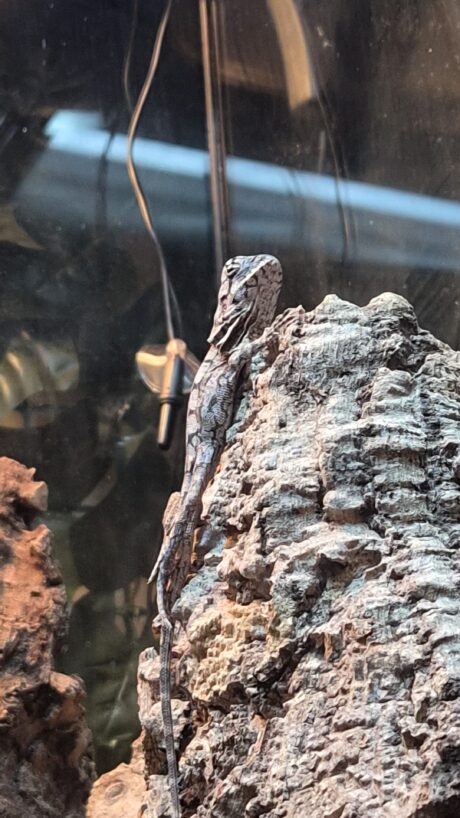
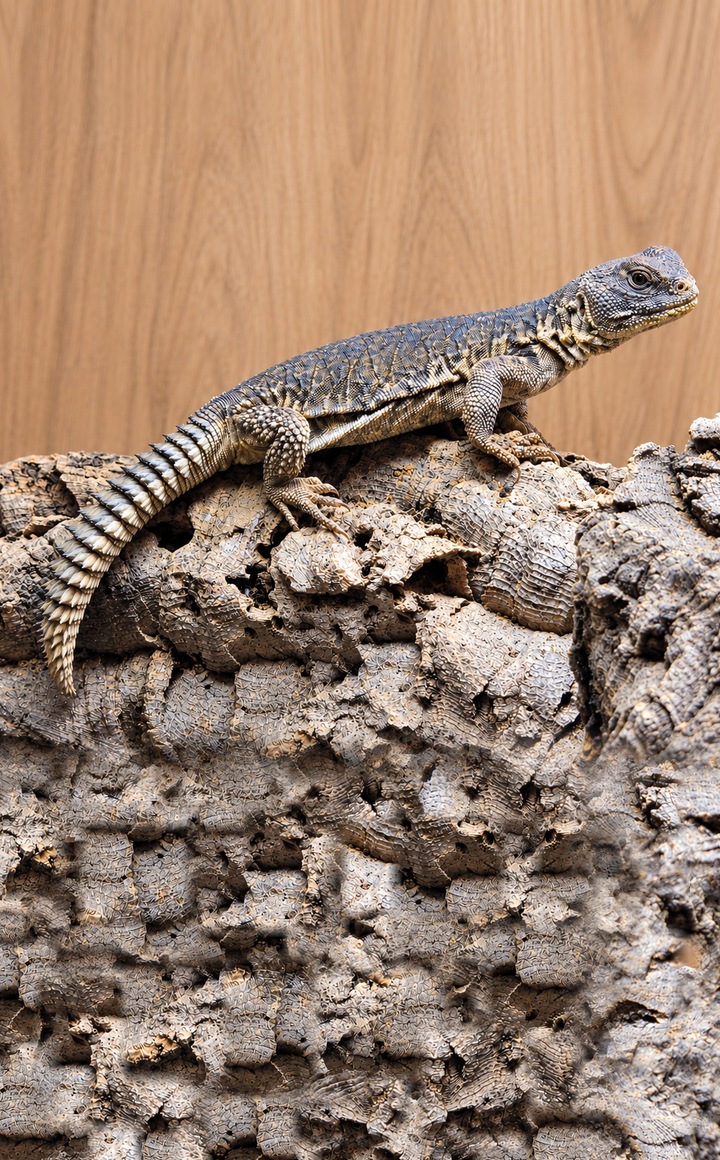
The Moroccan uromastyx is native to North Africa, primarily found in Morocco and Algeria .
Housing & Enclosure
- Vivarium Size: Minimum 4 x 2 x 2 ft wooden or front-opening terrarium with good ventilation to create a proper temperature gradient. Wooden vivariums help retain dry heat in cooler UK homes.
- Substrate: Deep desert substrate (such as a 50/50 mix of play sand and organic topsoil, or specialized clay/sand mixes) packed at least 4 inches deep for burrowing. Avoid fine sand or loose seeds/walnut shells.
- Hides & Decor: Provide multiple rock hides, slate stacks under the heat source for belly heat, and climbing branches.
Temperature & Lighting
- Basking Spot: Surface/basking temperature must reach 120°F to 130°F (approx. 49°–54°C), using halogen flood bulbs or ceramic/halogen heaters paired with a slate/Retes stack.
- Cool Side & Night: Cool zone around 80°F–85°F (27°–29°C), dropping to 23°–24°C at night (or using a non-light-emitting heat emitter if the room dips below 60°F).
- UVB Lighting: High-output desert UVB tube (10% to 14%–15% UVB) running on a 12-hour cycle.
- Humidity: Keep ambient humidity under 35% (ideally 20–30%) with strong ventilation.
Diet & Water
- Vegetarian Diet: Feed a daily salad of dark leafy greens (spring greens, dandelion greens, collard greens, mustard greens) and chopped bell peppers or grated squash.
- Seeds & Grains: Offer a small dish of dry seeds or grains like white millet and lentils a couple of times a week.
- Insects: Avoid or strictly minimize live insects; excess animal protein causes severe kidney and liver damage in captive uros.
- Water: Do not use a standing water bowl in the enclosure, as it raises humidity and causes respiratory infections. They get nearly all necessary moisture from fresh greens.
- Supplements: Dust greens with calcium and a reptile multivitamin (with D3) twice a week.