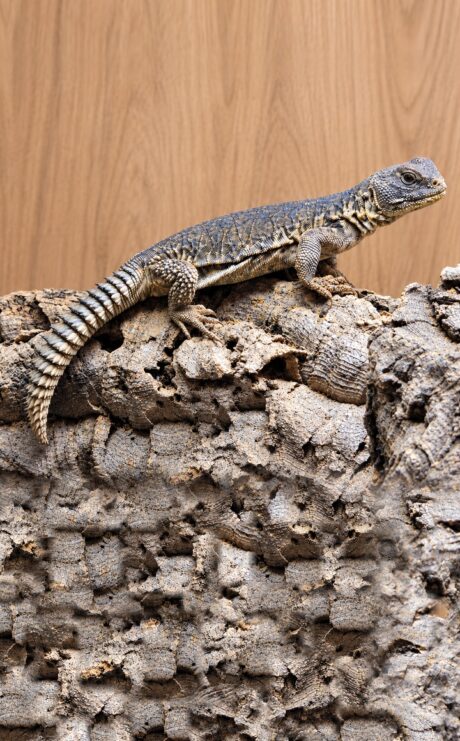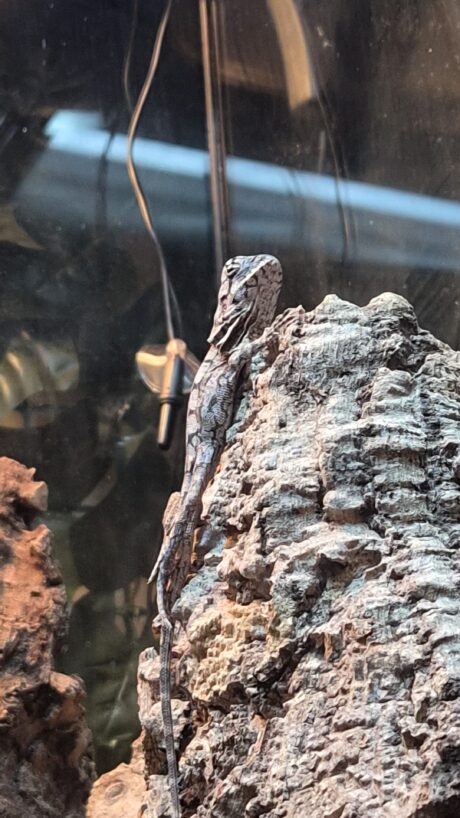
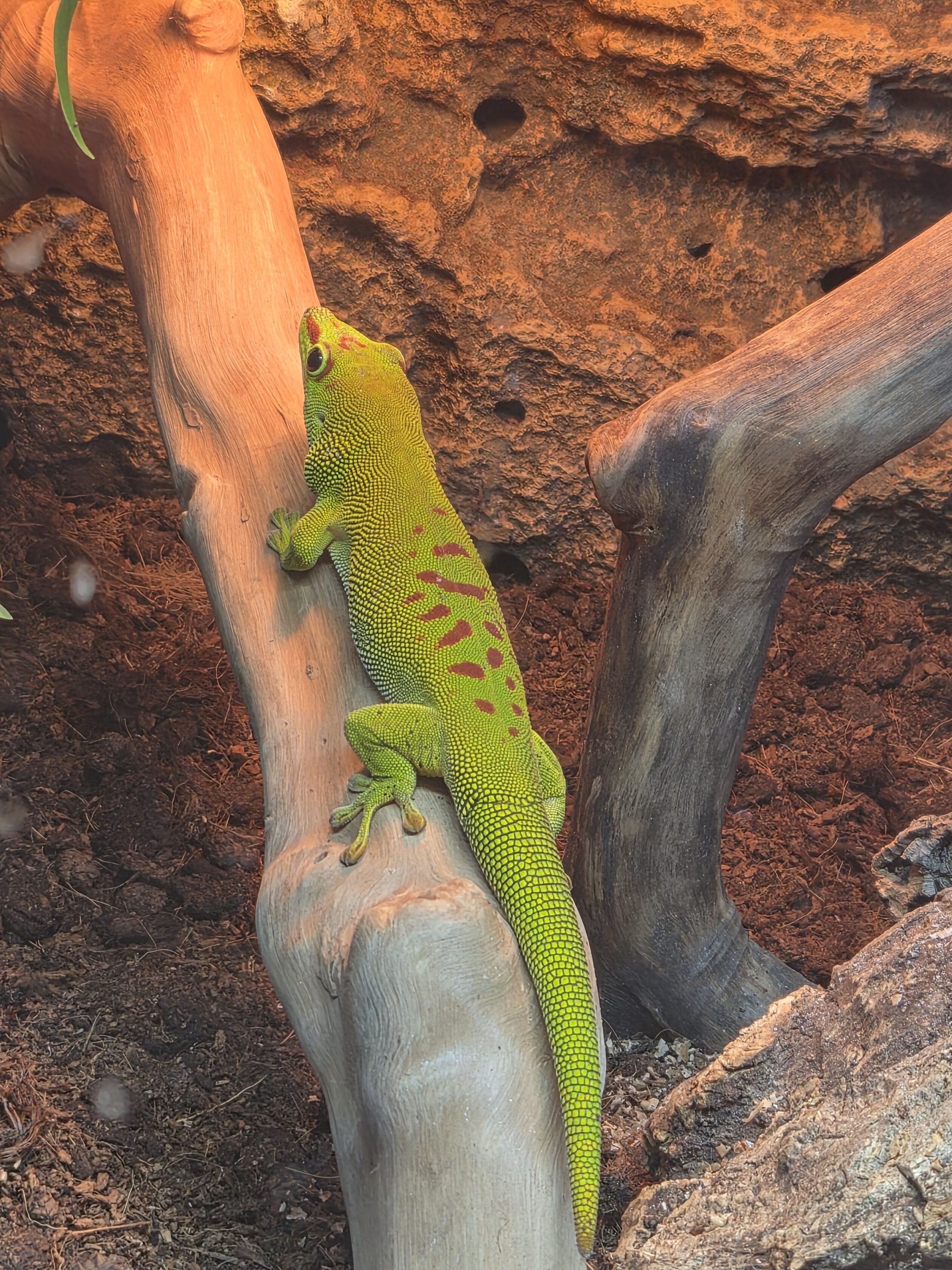
The giant day gecko (Phelsuma grandis) is native to the tropical and subtropical rainforests of northern and eastern Madagascar.
Housing & Enclosure
- Minimum Size: A tall glass terrarium measuring at least 24x24x36 inches (or 18x18x24 inches for a single adult as a baseline, though bigger is always better) is recommended.
- Decor: Include vertical climbing branches (such as bamboo), vines, and live or artificial foliage (like Pothos). They prefer glass sides and smooth vertical surfaces to climb.
- Housing Rule: House them solitarily; mature males will fight, though two similarly sized females can sometimes cohabitate in a very large setup.
Temperature & Heating
- Basking Spot: 32°C to 35°C (approx. 90–95°F) at the top of the enclosure.
- Ambient Temperature: 25°C to 29°C during the day, dropping to 21°C–24°C at night.
- Equipment: Use a low-wattage basking bulb or ceramic heat emitter controlled via a thermostat, paired with a UVB light source.
Lighting & UVB
- UVB Output: Provide a 5% to 7% UVB tube or mesh-lid setup running on a 10-to-12-hour daily photoperiod. Because they are diurnal (day-active), proper lighting is vital to prevent metabolic bone disease.
Humidity & Water
- Humidity: Maintain 55% to 70% humidity.
- Drinking: Mist the enclosure thoroughly every morning and evening. Giant day geckos typically refuse standing water bowls and instead lick water droplets directly off leaves and glass. A shallow elevated water dish can still be provided.
Diet & Supplementation
- Omnivorous Diet: Feed a base of live insects (crickets, locusts, roaches) dusted with calcium and D3, alternated with a commercial, high-quality crested/day gecko fruit and nectar diet paste.
- Frequency: Juveniles should be fed daily; adults every 2 to 3 days.
Handling
- Look, Don’t Touch: Giant day geckos are fast, skittish, and possess very delicate “tearaway” skin that easily rips if they are grabbed. Minimize handling and use a clear plastic tub if you need to transfer them.